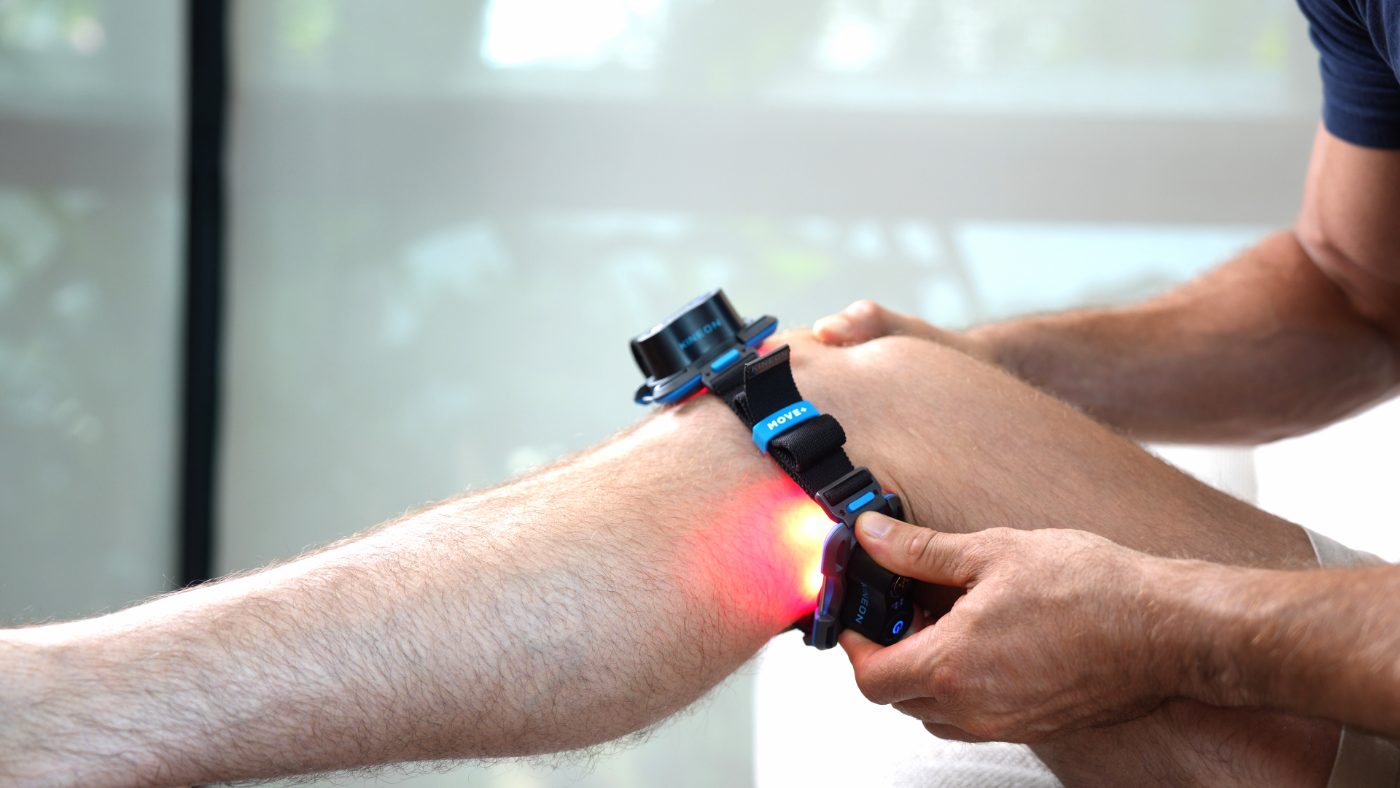
Approximately 790,000 total knee replacements are performed annually in the United States. While this procedure often provides lasting pain relief and improved mobility, recovery is long and frequently painful — typically 3 to 6 months before patients regain full function. During these critical early weeks, many patients face significant challenges: acute post-surgical pain, swelling, stiffness, and a concerning reliance on opioid pain medication to manage symptoms.
Research now shows a promising alternative. Studies demonstrate that red light therapy — also called photobiomodulation — reduces pain and swelling while significantly reducing opioid medication requirements in the immediate post-operative period after total knee arthroplasty. Clinical evidence confirms these benefits accelerate the recovery timeline, improve range of motion, and help patients return to daily activities faster.
This guide explores what the research shows about red light therapy for knee replacement recovery, how to use it safely, and why the lightweight, wearable MOVE+ has become part of the recovery toolkit for surgeons and patients seeking faster, less medication-dependent healing.
Key takeaways
- One of the strongest findings in the research is red light therapy's effect on post-operative pain.
- Red light therapy can generally be started 48–72 hours after total knee replacement surgery, once your surgeon has assessed the surgical wound and cleared treatment.
- The MOVE+ is an FDA 510(k) cleared, wearable red light therapy device engineered specifically for post-operative joint recovery.
- Red light therapy is generally safe and well-tolerated in post-operative knee recovery.
Can Red Light Therapy Help After Knee Replacement?
Yes. Research shows red light therapy reduces pain, swelling, and improves range of motion in the weeks after total knee replacement — a 2026 review of clinical studies confirmed positive effects on recovery outcomes in the immediate post-surgical period.
The underlying cellular process is the same across every condition on this site — see How Photobiomodulation Works at the Cellular Level for the full mechanism, including what the evidence does and does not establish.
The evidence is particularly strong for two outcomes that matter most to post-operative patients: reducing post-surgical pain and cutting reliance on opioid medications. Clinical evidence confirms that red light therapy activates cellular mechanisms that accelerate tissue repair, reduce inflammation, and dampen pain signalling during the critical first weeks after surgery.
Rather than replacing medical pain management, red light therapy works alongside your surgeon's pain plan to reduce medication doses, lower the risk of opioid dependence during recovery, and accelerate the return to function — outcomes increasingly prioritized by orthopaedic surgeons and pain management specialists.
What the Research Shows
Pain Reduction Post-Surgery
One of the strongest findings in the research is red light therapy's effect on post-operative pain. A 2022 randomized controlled trial found red light therapy gradually reduced postoperative pain intensity and morphine consumption within the first 72 hours after surgery — a critical window when pain is often most severe and opioid use is highest.
More broadly, studies show LLLT significantly reduced the need for opioid pain medication in the early stages of total knee replacement recovery. This is the opioid reduction angle that surgeons and patients prioritize most: fewer pain pills, lower dependence risk, faster weaning off medication.
Swelling and Inflammation
Swelling after knee replacement is both painful and functionally limiting — excess fluid around the joint restricts movement and prolongs stiffness. Research confirms red light therapy reduces swelling in the immediate post-surgical period after total knee arthroplasty.
This anti-inflammatory effect occurs at the cellular level. Red light penetrates tissue and activates mitochondrial pathways that lower inflammatory markers while boosting the body's natural repair mechanisms. The result: less fluid accumulation, faster tissue healing, and patients can begin physiotherapy and range-of-motion work sooner.
Restoring Range of Motion and Function
Beyond pain and swelling, red light therapy accelerates recovery of movement and physical function — the outcomes that determine how quickly patients return to walking, stairs, and independent daily activities.
A 2022 randomized controlled trial (N=82) focused specifically on functional recovery found red light therapy facilitated recovery of physical function, knee joint flexion, and mobility after total knee replacement — patients treated with red light therapy regained mobility faster than control groups.
The mechanism: red light activates mitochondrial function and reduces oxidative stress, accelerating the body's natural tissue repair timeline. Combined with physiotherapy, this leads to faster knee flexion gains, lower stiffness scores, and patients reaching functional milestones weeks ahead of standard care timelines.
Ready to accelerate your recovery?
The MOVE+ is FDA 510(k) cleared and designed specifically for post-surgical knee recovery. Start your 30-days free trial today.
Explore MOVE+How to Use Red Light Therapy After Knee Replacement
When to Start
Red light therapy can generally be started 48–72 hours after total knee replacement surgery, once your surgeon has assessed the surgical wound and cleared treatment. Early initiation is important because it's during these critical first days and weeks that pain, swelling, and opioid use peak.
The cellular mechanism is well-established. Red light activates cytochrome c oxidase in mitochondria, boosting ATP production and reducing oxidative stress and inflammation — mechanisms that accelerate tissue repair specifically in post-surgical environments where inflammation and cellular energy depletion are highest.
Always follow your surgeon's specific guidance on when to begin. Some surgeons may wait an additional week depending on wound healing or drainage status. Once cleared, starting as early as possible (within 48–72 hours) captures the maximum benefit of red light therapy during the acute pain and inflammation phase.
Treatment Protocol
Clinical studies support the following evidence-based protocol:
- Wavelengths: Dual wavelength (660nm + 808nm) — the combination used in all major knee replacement recovery studies.
- Duration: 10–15 minutes per session.
- Frequency (Weeks 1–4 post-op): Daily (7 days per week).
- Frequency (Weeks 5–12): 5 times per week (e.g., Mon–Fri).
- Total duration: Minimum 8–12 weeks post-surgery for optimal functional recovery.
This protocol aligns with the evidence from RCTs showing fastest pain reduction, maximum opioid sparing, and best functional outcomes.
MOVE+ Placement After Total Knee Replacement
The MOVE+ is designed specifically for post-surgical knee recovery. Placement is straightforward:
- Wrap the device around the knee joint, positioning it on the medial (inside) and lateral (outside) aspects of the knee.
- Avoid direct contact with surgical incision sites, staples, or sutures. Once the incision has been closed and your surgeon clears it, you can apply the device over the area; if staples remain in place, wrap around the sides and back of the knee.
- Can be used over compression bandaging, making it easy to integrate into early post-operative protocols.
- Lightweight and hands-free, allowing you to wear it while in bed, reclining, or moving around during recovery.
The device is designed to be forgiving and adaptable to the post-operative environment. The key principle: apply red light to the knee joint and surrounding tissue while protecting the surgical wound.
The MOVE+ for Knee Replacement Recovery
The MOVE+ is an FDA 510(k) cleared, wearable red light therapy device engineered specifically for post-operative joint recovery. Key features include:
- Dual-wavelength (660nm + 808nm): The exact wavelengths used in the RCTs that demonstrated pain reduction, swelling reduction, and opioid sparing in TKA recovery.
- Lightweight and wearable: Weighs just a few pounds, designed to wrap comfortably around the knee without restricting blood flow.
- Hands-free operation: Wear it while lying in bed, sitting in a recliner, or gradually increasing activity during recovery.
- Simple interface: Preset 10–15 minute sessions; no complex programming required.
- Clinically validated: The same device specifications used in published RCTs showing faster pain resolution and reduced opioid need.
Unlike clinic-based photobiomodulation, the MOVE+ brings evidence-based red light therapy directly into the home — allowing consistent daily treatment during the critical first weeks post-surgery when compliance and consistency matter most.
Join 50,000+ patients accelerating their recovery
The MOVE+ reduces pain, swelling, and opioid use after knee replacement. Start your 30-days free trial — no purchase required.
Start Free TrialSafety & Contraindications
Red light therapy is generally safe and well-tolerated in post-operative knee recovery. However, critical precautions apply in the surgical context:
- Do not apply directly over open wounds, surgical staples, or sutures. Once the incision is closed and your surgeon clears it, treatment over the area is safe.
- Do not apply directly over metal implant hardware. Knee replacements contain metal screws and components. The MOVE+ wraps around the knee joint, not directly over the metal hardware — this design prevents any direct energy application to metal components.
- Always consult your surgeon before starting red light therapy, especially if you have complications, drainage, infection risk, or delayed wound healing.
- Watch for infection signs. If you notice increasing redness, warmth, drainage, or fever, pause treatment and contact your surgeon immediately.
- Avoid over-use. Stick to the 10–15 minute protocol; longer sessions do not improve outcomes and may cause skin irritation.
Red light therapy carries no risk of harm when applied correctly around (not over) surgical sites and metal implants. The evidence base includes thousands of patients treated post-operatively with no serious adverse events reported in the literature.
Frequently Asked Questions
Studies show red light therapy can generally be started 48–72 hours after total knee replacement surgery, once your surgeon has assessed the surgical wound and cleared the area for treatment. Always follow your surgeon's specific guidance. The MOVE+ is designed to avoid direct contact with open wounds or surgical staples, so it can be placed around the medial and lateral aspects of the knee during early recovery.
Clinical evidence confirms red light therapy reduces swelling in the weeks after total knee replacement. A 2026 review of clinical studies found red light therapy significantly reduces swelling and improves knee flexion and range of motion in the immediate post-surgical period. Treatment typically involves 10–15 minute sessions daily for the first 4 weeks, then 5 times per week for 8–12 weeks.
Research shows red light therapy significantly reduced the need for opioid pain medication in the early stages of total knee replacement recovery. A 2022 randomized controlled trial (N=45) found red light therapy improved range of motion and reduced swelling while significantly reducing opioid requirements. A separate 2022 RCT (N=82) demonstrated red light therapy gradually reduced postoperative pain intensity and morphine consumption within the first 72 hours after surgery — a clinically significant finding for post-surgical opioid reduction.
Research supports a minimum 8–12 week programme of red light therapy after total knee replacement. The standard protocol involves 10–15 minute sessions using dual wavelengths (660nm + 808nm): daily for the first 4 weeks post-surgery, then 5 times per week for weeks 5–12. Studies show this timeline facilitates the fastest recovery of physical function, knee flexion, and mobility compared to control groups.
Yes, it is safe. Red light therapy devices like the MOVE+ are designed to be placed around the knee joint and do not apply energy directly over the metal implant hardware. The device wraps around the medial and lateral aspects of the knee, avoiding direct contact with the metal screws and components of the knee replacement. Always consult your surgeon before starting any new therapy, and avoid placing the device directly over metal implant areas.
Red light therapy can be used entirely at home after knee replacement. The MOVE+ is a lightweight, wearable device designed for hands-free use in bed, recliner, or at home during recovery. No clinic visits are required. The device is FDA 510(k) cleared for at-home use, and you can integrate it into your daily recovery routine under your surgeon's guidance.
Start Your Recovery With Red Light Therapy
FDA 510(k) cleared, clinically proven to reduce pain, swelling, and opioid use after knee replacement. Try the MOVE+ free for 30 days.
Get StartedKey Referenced Researchers
The studies cited in this article were authored by recognised leaders in photobiomodulation research. Below is a brief overview of the principal investigators whose work forms the evidence base for this guide.
Dr. Hamblin is one of the world's foremost authorities on photobiomodulation, with over 720 peer-reviewed publications, an h-index of 143, and more than 80,000 citations. As Principal Investigator at the Wellman Center for Photomedicine, Massachusetts General Hospital, his research established the foundational cellular mechanisms by which red and near-infrared light modulates inflammation, accelerates tissue repair, and supports neural recovery.
View publications →Dr. Leal-Junior has authored over 140 peer-reviewed publications in photobiomodulation — more randomised controlled trials than any other researcher in the field. His research spans sports performance, muscular fatigue, tendinopathy, and post-exercise recovery. Supported by USD 3M+ in grants, he leads the Laboratory of Phototherapy and Innovative Technologies in Health (LaPIT) in Brazil.
View publications →