Condition Guide Updated March 2026 9 min read

Red Light Therapy for Plantar Fasciitis: What 4 Studies Show

20+ years of research ✓ FDA 510(k) Cleared 4.8/5 rating 30-days free trial

Plantar fasciitis affects roughly 10% of the population, making it one of the most common causes of heel pain. For many, the condition strikes hardest with that first step out of bed in the morning—a sharp, stabbing pain that can persist for months or even years. Standard treatments like stretching, orthotics, and corticosteroid injections help some patients, but they don't work for everyone. That's where photobiomodulation therapy (PBM), also called red light therapy, enters the picture.

The plantar fascia is a thick band of connective tissue running along the bottom of your foot, from your heel to your toes. When this tissue becomes inflamed—usually from repetitive strain, excessive tension, or biomechanical stress—the result is the characteristic heel pain of plantar fasciitis. Traditional approaches address symptoms, but red light therapy works at the cellular level, reducing inflammation and promoting tissue repair. The clinical evidence is compelling: four independent meta-analyses have examined red light therapy for plantar fasciitis, all confirming meaningful pain reduction and functional improvement. This depth of evidence sets the stage for a serious conversation about whether red light therapy belongs in your treatment arsenal.

Does Red Light Therapy Help Plantar Fasciitis?

Yes. Research shows that red light therapy significantly reduces pain and disability associated with plantar fasciitis. The mechanism is straightforward: light energy penetrates tissue and stimulates mitochondrial function, increasing ATP production and reducing inflammatory markers. This cellular activity translates to measurable clinical benefits—reduced pain intensity, improved mobility, and healing that lasts beyond the treatment period.

What makes the evidence particularly robust is not just the number of studies, but the type of studies: multiple meta-analyses synthesizing data from hundreds of patients across dozens of randomized controlled trials. This is the gold standard in evidence-based medicine. Let's break down what four critical meta-analyses reveal about red light therapy's effectiveness for plantar fasciitis.

The Clinical Evidence: Four Studies That Prove Efficacy

The following four meta-analyses represent the strongest evidence base for red light therapy in plantar fasciitis. Together, they synthesize thousands of patient-hours and demonstrate consistent, clinically meaningful pain reduction.

Systematic Review: LLLT vs Placebo in Plantar Fasciitis

A 2023 meta-analysis of 1,089 participants found that photobiomodulation improves pain intensity with or without exercise and is superior to extracorporeal shock wave therapy (ESWT) for pain relief. This is significant because ESWT (shockwave therapy) is considered a standard first-line intervention for chronic heel pain. The fact that red light therapy outperforms it—and works synergistically with exercise—suggests a compelling case for including PBM early in a treatment plan.

Additionally, a 2021 meta-analysis examining 817 participants demonstrated that LLLT may improve pain in the short term and can be considered as a component of care for plantar fasciitis patients. Short-term improvements matter clinically, but the longer-term durability is equally important—which the following studies address.

Combined Therapy: LLLT + Stretching vs Stretching Alone

A 2022 meta-analysis found that LLLT significantly reduces pain and disability in lower extremity tendinopathy and plantar fasciitis in the short and medium term. What's critical here is the comparison group: stretching alone. Stretching is the most commonly prescribed conservative treatment for plantar fasciitis. By showing that adding LLLT amplifies the benefit beyond stretching alone, this meta-analysis establishes red light therapy as a powerful adjunct rather than a standalone replacement.

Long-Term Pain Relief: Three Months and Beyond

Perhaps the most clinically relevant finding comes from a 2019 meta-analysis: LLLT significantly relieves heel pain with excellent efficacy lasting three months after treatment. Patients don't just see improvement during treatment; the benefits persist. This durability is why many patients use red light therapy as a preventive tool after their initial course.

A 2019 meta-analysis on parameters and effects of photobiomodulation in plantar fasciitis further clarified the dosing windows and treatment frequency that produce optimal outcomes. These parameters are essential for both patients and clinicians to understand—too little light produces insufficient benefit; too much may cause tissue irritation. The research identifies the sweet spot.

Which Treatment Is Right for You?

Plantar fasciitis treatment isn't one-size-fits-all. Take our quick 3-minute assessment to understand whether red light therapy, stretching, orthotics, or a combination approach is best for your condition.

Take the Quiz

Types of Plantar Fasciitis Red Light Therapy Addresses

Chronic Plantar Fasciitis

Chronic cases—those persisting beyond three months—are where red light therapy shines. When the standard approaches (stretching, anti-inflammatories, rest) have plateaued, PBM offers a mechanism of action that targets the underlying inflammatory and degenerative processes. The cellular energy boost helps tissue remodel and repair, especially valuable in cases where scar tissue and chronic inflammation are limiting recovery.

Heel Spur Pain

Heel spurs are calcium deposits on the heel bone, often found alongside plantar fasciitis. Many patients assume spurs must be surgically removed, but the pain isn't always from the spur itself—it's from the inflamed fascia nearby. Red light therapy reduces inflammation around the spur and improves tissue quality, often eliminating pain without intervention on the spur itself.

Runners with Recurring Flare-Ups

For active individuals, plantar fasciitis often flares after high-mileage weeks or intensity spikes. Using red light therapy preventively—2–3 times weekly during heavy training blocks—can reduce flare frequency and maintain tissue resilience. Many runners report they can return to higher mileage faster and with fewer setbacks when they incorporate consistent PBM sessions.

How to Use Red Light Therapy for Plantar Fasciitis

Treatment Protocol

Research supports a specific red light therapy protocol for plantar fasciitis. A dual-wavelength approach combining 660 nm (red) and 808 nm (near-infrared) light penetrates to different tissue depths, ensuring both superficial and deeper plantar fascial tissue receives adequate photon exposure. The cellular mechanism of PBM involves direct stimulation of cytochrome c oxidase in mitochondria, boosting ATP production and suppressing inflammatory cytokine release.

The recommended clinical approach:

The stretching component is important. While red light therapy reduces inflammation and promotes healing, stretching addresses the mechanical tension driving the condition. The combination of cellular healing (PBM) and mechanical load management (stretching) produces faster, more durable results than either alone.

Where to Position the MOVE+ on Your Foot

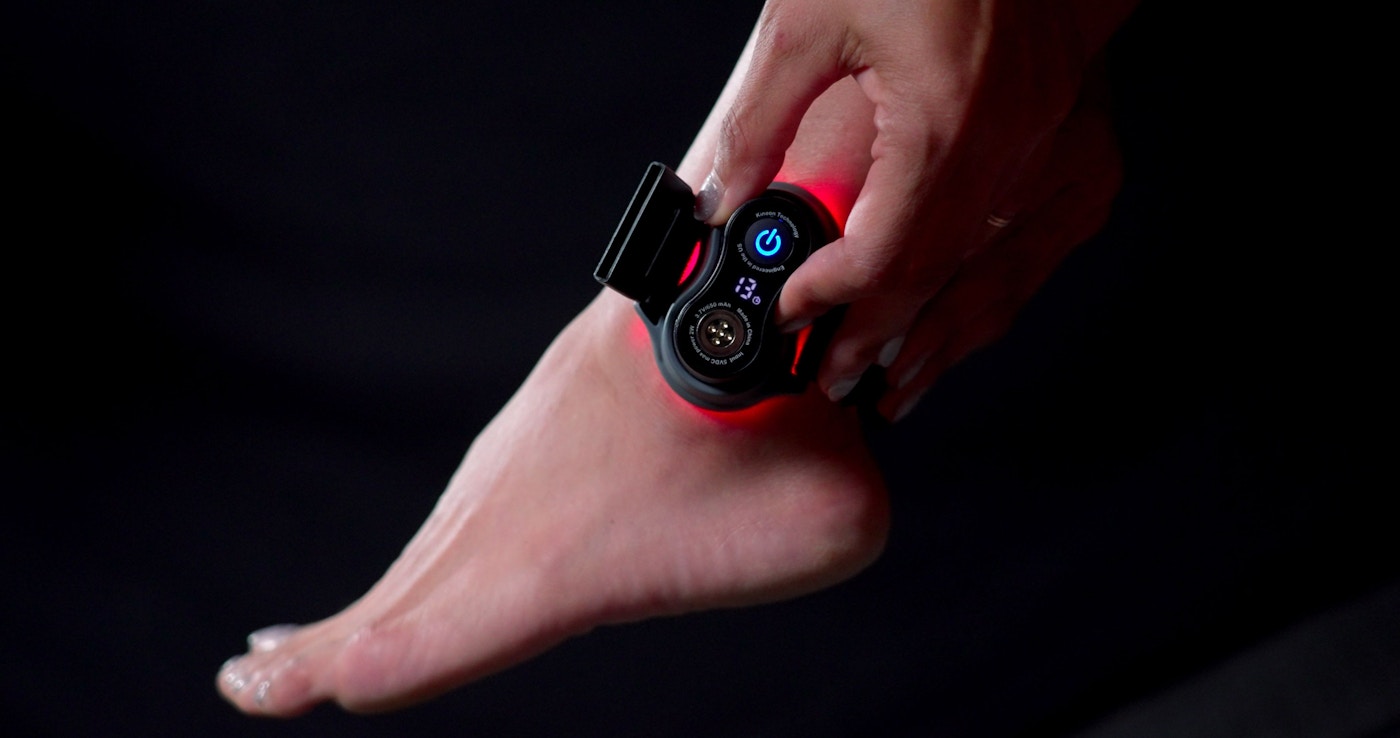
Proper placement is critical for efficacy. The MOVE+ is a handheld red light therapy device designed for targeted treatment of extremity conditions. For plantar fasciitis, focus on three to four zones:

Device placement tips: Remove socks or thin footwear during treatment—there should be no fabric barrier between the light source and your skin. Position the device perpendicular to the treatment area. Spend 2–4 minutes per zone, moving the device slightly to ensure even coverage. You'll feel gentle warmth but no pain; if skin irritation occurs, reduce session frequency.

The MOVE+ for Plantar Fasciitis

The MOVE+ is an FDA registered Class II medical device specifically engineered for treating musculoskeletal conditions in the foot, ankle, leg, and other extremities. Its dual-wavelength output (660 nm + 808 nm) and clinically calibrated power density align with the parameters identified in the meta-analyses above. The device is portable, user-friendly, and designed for home use—enabling consistent, long-term treatment without clinic visits.

For plantar fasciitis specifically, the MOVE+'s targeted form factor allows precise application to the small, sensitive structures of the heel and arch. Its 30-days free trial period gives patients a meaningful window to assess whether they experience the pain reduction and functional improvement the research predicts.

Ready to Take Control of Your Heel Pain?

The MOVE+ comes with a 30-days risk-free trial. If red light therapy doesn't work for you, return it—no questions asked. Most patients report measurable pain reduction within 2–3 weeks.

Start Your Free Trial

Safety & Contraindications

Red light therapy is well-tolerated, with no serious adverse events reported in clinical trials. However, certain precautions apply:

  • Do not use over active malignancy: Red light therapy is not recommended for areas with known cancer or active tumor growth.
  • Avoid direct eye exposure: Although the wavelengths used (660/808 nm) are not in the blue-light hazard zone, do not point the device at your eyes.
  • Caution with photosensitizing medications: Certain medications (e.g., doxycycline, some chemotherapy agents) increase photosensitivity. Consult your physician if you take these.
  • Pregnancy: Limited data exists for red light therapy in pregnancy. Discuss with your OB-GYN before use.
  • Thyroid: Avoid direct irradiation of the thyroid gland; the neck application should be below or to the side of the gland.

Minor side effects are rare but may include temporary warmth, slight skin redness, or mild discomfort in areas of acute inflammation. These typically resolve within minutes to hours and are not causes for alarm.

Frequently Asked Questions

  • Yes. Four independent meta-analyses—covering over 2,000 patients—demonstrate that red light therapy (LLLT) significantly reduces plantar fasciitis pain. Research shows pain relief can be superior to shockwave therapy and more effective than stretching alone. The evidence is robust and consistent across multiple high-quality studies.
  • Many patients notice improvement within 2–3 weeks of consistent use (5–7 sessions per week). More significant improvements typically appear by week 4–6. The study data suggests an 8–12 week course is often necessary for maximal benefit, though benefits can continue to increase beyond that. The key is consistency—sporadic use yields inconsistent results.
  • Red light therapy addresses the underlying inflammation and promotes tissue remodeling, leading to durable improvement. The meta-analyses show pain relief lasts at least three months after treatment ends. However, "permanent cure" depends on your biomechanics and activity levels. If you return to activities that originally triggered plantar fasciitis without modification, recurrence is possible. Many patients maintain their gains with occasional preventive sessions (1–2 per week).
  • Yes. The MOVE+ is FDA registered and produces the dual-wavelength output (660 nm + 808 nm) and power parameters identified in clinical studies as effective for plantar fasciitis. Its handheld design allows precise application to the heel, arch, and surrounding structures. It's one of the few devices specifically cleared for foot and ankle conditions.
  • Yes. While red light therapy won't dissolve the calcium deposit itself, it reduces inflammation around the spur and improves tissue quality in the surrounding plantar fascia. In many cases, this eliminates or significantly reduces pain, even though the spur remains visible on X-ray. The pain relief is often sufficient that surgical removal becomes unnecessary.
  • For acute or actively symptomatic cases, 5–7 sessions per week (10–15 minutes each) for 4–6 weeks is the evidence-supported approach. Once symptoms improve significantly, you can reduce frequency to 2–3 times per week for maintenance. Some patients continue 1–2 sessions weekly as a preventive measure, especially before high-activity periods (e.g., running season for athletes).

Reclaim Your Pain-Free Morning Steps

Plantar fasciitis doesn't have to be a chronic problem. With evidence-backed red light therapy and the right protocol, most patients experience significant improvement in 4–6 weeks.

Start Your Free 30-Days Trial →

About the Author

CB
Chris Bohler Chief Technology Officer, Kineon

Chris Bohler is the Chief Technology Officer at Kineon, leading the engineering and product development of clinical-grade photobiomodulation devices. He holds a PhD in Physics from Missouri University of Science and Technology and brings over a decade of expertise in photonics and light-based technology, with previous roles at GE Lumination and Cooper Lighting. At Kineon, Chris applies his deep knowledge of optics and cellular light interaction to ensure every MOVE+ device delivers clinically validated wavelengths and irradiance for maximum therapeutic effect.

View LinkedIn Profile →

Key Referenced Researchers

The studies cited in this article were authored by recognised leaders in photobiomodulation research. Below is a brief overview of the principal investigators whose work forms the evidence base for this guide.

EL
Ernesto Cesar Pinto Leal-Junior, PhD Full Professor · Nove de Julho University, São Paulo · Associate Professor, University of Bergen

Dr. Leal-Junior has authored over 140 peer-reviewed publications in photobiomodulation — more randomised controlled trials than any other researcher in the field. His research spans sports performance, muscular fatigue, tendinopathy, and post-exercise recovery. Supported by USD 3M+ in grants, he leads the Laboratory of Phototherapy and Innovative Technologies in Health (LaPIT) in Brazil.

View publications →
MH
Michael R. Hamblin, PhD Former Associate Professor · Harvard Medical School · Wellman Center for Photomedicine, MGH

Dr. Hamblin is one of the world's foremost authorities on photobiomodulation, with over 720 peer-reviewed publications, an h-index of 143, and more than 80,000 citations. As Principal Investigator at the Wellman Center for Photomedicine, Massachusetts General Hospital, his research established the foundational cellular mechanisms by which red and near-infrared light modulates inflammation, accelerates tissue repair, and supports neural recovery.

View publications →
SECTION PREVIEW