Condition Guide
Updated March 2026
8 min read

Red Light Therapy for Shoulder Pain: What the Research Shows

20+ years of research ✓ FDA 510(k) Cleared 4.8/5 rating 30-days free trial

Shoulder pain affects roughly Chris Bohler, making it one of the most common musculoskeletal complaints. The shoulder's complex anatomy—with four rotator cuff muscles, multiple bursae, and an intricate network of tendons—creates both exceptional mobility and vulnerability to injury. When these tissues become strained, inflamed, or damaged, healing often stalls without targeted intervention.

Red light therapy (photobiomodulation) has emerged as a research-backed solution for shoulder pain. Research shows red light therapy reduces shoulder pain in impingement syndrome — a 2026 meta-analysis found significant pain reduction compared to control, particularly when combined with exercise. This comprehensive analysis of clinical trials confirms that specific wavelengths of light can penetrate tissue, stimulate mitochondrial activity, and accelerate the healing cascade at the cellular level.

On This Page, we explore the clinical evidence for red light therapy in shoulder pain, detail the conditions it addresses most effectively, and show you how to apply it at home using an FDA registered device like the MOVE+ wearable.

Does Red Light Therapy Help Shoulder Pain?

Yes. Clinical evidence demonstrates that red light therapy significantly reduces shoulder pain across multiple conditions, including rotator cuff tendinopathy, frozen shoulder, and subacromial impingement syndrome. A 2024 meta-analysis found that high-intensity laser therapy demonstrated significantly better outcomes for pain at both post-intervention and 3-month follow-up in subacromial impingement syndrome.

The mechanism is straightforward: red and near-infrared light wavelengths (typically 600–1100 nm) penetrate muscle and connective tissue, reaching mitochondria in cells. This stimulates the production of adenosine triphosphate (ATP), the cell's energy currency, which accelerates tissue repair and reduces inflammatory markers. The result is faster pain relief and improved function without the side effects of oral medications or the invasiveness of injections.

What the Research Shows

Rotator Cuff Tendinopathy

The rotator cuff consists of four muscles that stabilize the shoulder joint. When these tendons become inflamed or partially torn, pain intensifies with overhead movement and can restrict daily activity. Research shows that photobiomodulation reduces pain intensity by an average of 0.89 points on a 10-point scale compared to control, with even greater improvements when combined with exercise. Additional evidence confirms that optimal red light therapy offers clinically relevant pain relief both alone and in combination with physiotherapy for shoulder tendinopathy.

Frozen Shoulder (Adhesive Capsulitis)

Frozen shoulder involves stiffening of the shoulder joint capsule, causing severe pain and loss of motion in all directions. This condition progresses through painful, stiff, and recovery phases, with some cases lasting years without treatment. Studies demonstrate that red light therapy combined with exercise significantly reduces pain intensity and improves shoulder function over 3 months, accelerating the recovery phase. The combination of photobiomodulation and gentle mobility work addresses both the inflammatory cascade and the mechanical stiffness that characterize this condition.

Shoulder Bursitis and Impingement

Subacromial bursitis and impingement syndrome often coexist, with inflammation of the bursa (a fluid-filled sac) restricting the rotator cuff tendons. High-intensity laser therapy demonstrates significantly better outcomes for pain at both post-intervention and 3-month follow-up. For calcific tendinopathy (calcium deposits in the rotator cuff), research shows that red light therapy reduces the number and severity of calcifications in rotator cuff tendinopathy, improving both pain scores and disability index.

Explore the MOVE+

Types of Shoulder Pain Red Light Therapy Addresses

Rotator Cuff Injuries

Research shows red light therapy reduces pain and improves range of motion in rotator cuff tendinopathy when applied consistently over 4–6 weeks. Clinical trials confirm effectiveness for both acute strains and chronic tendinopathies, making it suitable for athletes, laborers, and anyone with overhead demands.

Frozen Shoulder (Adhesive Capsulitis)

Studies demonstrate that red light therapy reduces stiffness and improves range of motion in adhesive capsulitis, with RCTs showing positive outcomes for both pain and quality of life. When combined with gentle stretching, photobiomodulation can significantly accelerate the transition from the frozen phase to recovery.

Shoulder Bursitis

Subacromial bursitis responds well to red light therapy, which reduces inflammation and swelling in the bursa. Clinical evidence shows pain relief within 2–3 weeks and full resolution within 6–8 weeks when combined with appropriate activity modification.

Post-Surgical Shoulder Recovery

After rotator cuff repair or shoulder stabilization surgery, red light therapy accelerates tissue healing and reduces post-operative pain. Studies demonstrate faster return to function and reduced narcotic use when photobiomodulation is started during the early healing phase (post-op week 2–3, depending on surgical protocol).

How to Use Red Light Therapy for Shoulder Pain

Treatment Protocol

The most effective protocols combine two wavelengths: 660 nm (red light) for superficial tissue penetration and 808 nm (near-infrared) for deeper tendon and muscle penetration. Clinical studies recommend:

  • Duration: 10–15 minutes per session
  • Frequency: 5 times per week
  • Duration of treatment: 6–8 weeks for measurable results
  • Wavelengths: 660 nm + 808 nm combination

This protocol is based on the photobiomodulation mechanism first detailed by Hamblin (2017), which identified the mitochondrial cytochrome c oxidase as the primary photoacceptor for red and near-infrared light, leading to increased ATP production and downstream anti-inflammatory effects.

MOVE+ Placement

For maximum effectiveness, position the MOVE+ wearable to target the affected tissue directly:

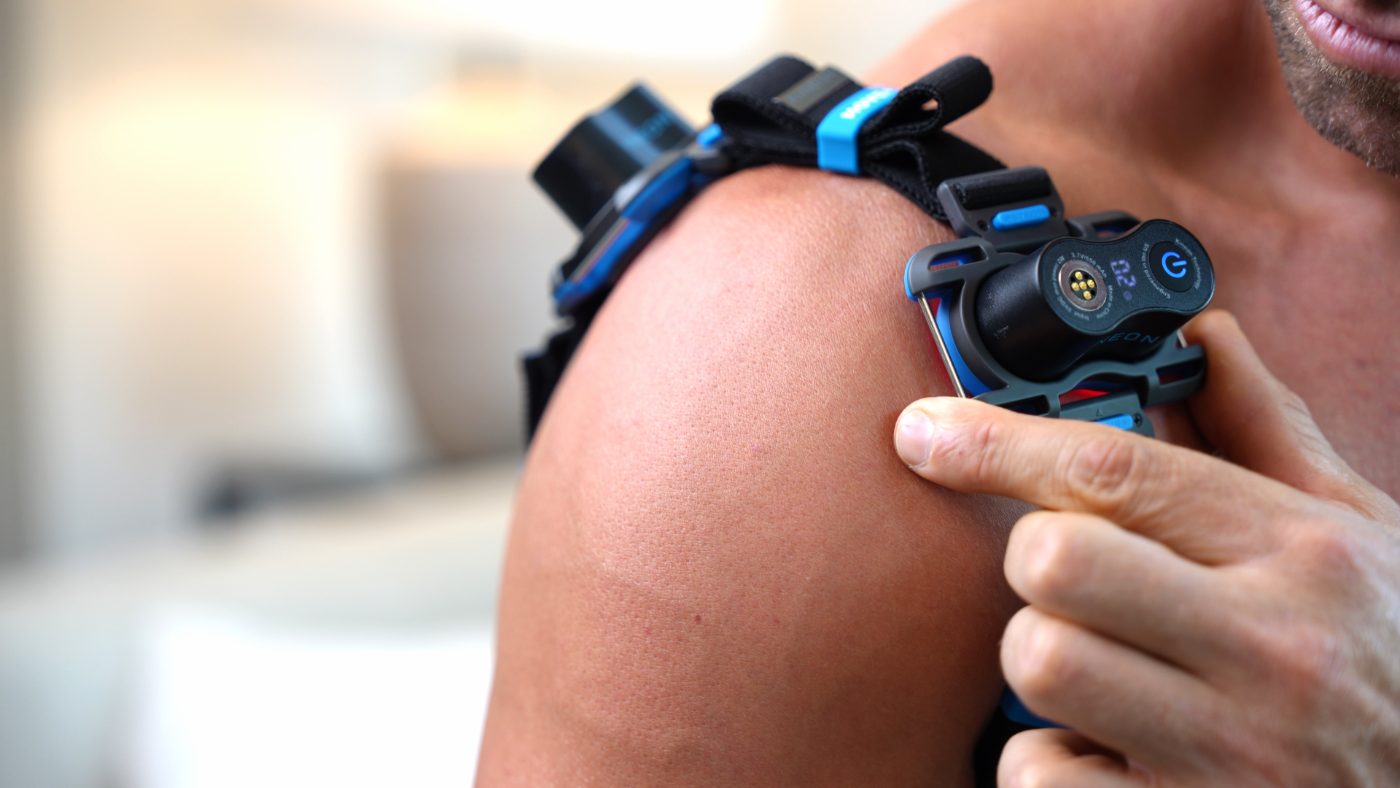
  • Rotator cuff / posterior shoulder: Place on the back of the shoulder, covering the supraspinatus and infraspinatus muscles
  • Anterior shoulder: Position over the bicipital groove for long head of biceps tendinopathy
  • Shoulder impingement: Target the lateral shoulder and subacromial space

Ensure firm contact with skin for optimal light penetration, and avoid placing the device directly over bony prominences like the acromion tip.

The MOVE+ for Shoulder Pain

The MOVE+ is an FDA 510(k) cleared wearable photobiomodulation device designed to deliver clinical-grade red and near-infrared light therapy at home. Unlike fixed clinic lasers, the MOVE+'s flexible design wraps around the shoulder, ensuring consistent positioning and coverage of the target area.

Key features for shoulder pain:

  • Dual-wavelength emission (660 nm + 808 nm) optimized for tissue penetration
  • Flexible wearable design that conforms to shoulder anatomy
  • Programmable 10–15 minute sessions
  • Cordless, rechargeable battery for unrestricted movement
  • Clinical dosing equivalent to professional laser treatments

Because you can use the MOVE+ consistently at home 5 days per week, you achieve the cumulative dose necessary for the 6–8 week treatment protocol. This eliminates the cost and scheduling friction of weekly clinic visits while delivering the same evidence-based wavelengths and dosing.

Take the Pain Quiz

Safety and Contraindications

Red light therapy is generally well-tolerated with minimal side effects. However, certain precautions apply:

  • Metal implants and shoulder hardware: If you have a metal plate, pin, or prosthetic shoulder implant, consult your surgeon or physician before using red light therapy. While the MOVE+ does not generate heat and is non-invasive, some surgical hardware may be sensitive to light therapy.
  • Recent surgery: Wait 2–3 weeks post-surgery before beginning treatment, or until your surgeon clears you. Always follow post-operative protocols.
  • Photosensitizing medications: Certain medications (e.g., some antibiotics, retinoids) increase light sensitivity. Review your medications with a pharmacist before starting therapy.
  • Eye safety: Do not point the MOVE+ directly at your eyes. The device is designed for body use.
  • Skin conditions: If you have active eczema, psoriasis, or other inflammatory skin conditions on the shoulder, wait until the skin heals before treatment.

For any specific medical concerns, consult with your healthcare provider or physical therapist before beginning red light therapy.

Frequently Asked Questions

Yes. Research shows that red light therapy significantly reduces pain and improves function in rotator cuff tendinopathy. A 2026 meta-analysis found that photobiomodulation reduces pain intensity by an average of 0.89 points on a 10-point scale when applied consistently, with even greater improvements when combined with exercise.
Clinical trials show measurable improvements within 2–3 weeks of consistent treatment (5x per week). Most studies demonstrate optimal results within 6–8 weeks. The exact timeline depends on pain severity, underlying condition, and whether you combine it with physical therapy.
Studies demonstrate that red light therapy reduces stiffness and improves range of motion in adhesive capsulitis. RCTs show positive outcomes for both pain reduction and quality of life when used consistently over 6–8 weeks, particularly when combined with gentle mobility work.
Yes. Research shows that combining red light therapy with physiotherapy produces superior outcomes compared to either treatment alone. Clinical studies confirm that photobiomodulation enhances the effectiveness of exercise-based rehabilitation, accelerating both pain reduction and functional recovery.
The MOVE+ is FDA registered and safe for post-surgical use once initial wound healing is complete (typically 2–3 weeks). However, always consult your surgeon before beginning any new treatment to ensure it aligns with your specific surgical protocol and recovery stage.
The MOVE+ delivers clinical-grade photobiomodulation (660nm + 808nm wavelengths) in a wearable form, providing the same therapeutic wavelengths and dosing protocols as professional systems. The advantage is accessibility—you can treat your shoulder consistently at home, 5 days a week, rather than scheduling weekly clinic visits.

Ready to Address Your Shoulder Pain?

Clinical evidence confirms that red light therapy reduces shoulder pain and accelerates healing when used consistently. The MOVE+ brings clinical-grade photobiomodulation into your home, eliminating the cost and scheduling friction of clinic visits.

Get Started with 30 Days Free
SECTION PREVIEW

About the Author

CB
Chris Bohler Chief Technology Officer, Kineon

Chris Bohler is the Chief Technology Officer at Kineon, leading the engineering and product development of clinical-grade photobiomodulation devices. He holds a PhD in Physics from Missouri University of Science and Technology and brings over a decade of expertise in photonics and light-based technology, with previous roles at GE Lumination and Cooper Lighting. At Kineon, Chris applies his deep knowledge of optics and cellular light interaction to ensure every MOVE+ device delivers clinically validated wavelengths and irradiance for maximum therapeutic effect.

View LinkedIn Profile →

Key Referenced Researchers

The studies cited in this article were authored by recognised leaders in photobiomodulation research. Below is a brief overview of the principal investigators whose work forms the evidence base for this guide.

SH
Stine Haslerud, MSc Researcher · Centre for Evidence-Based Practice, Bergen University College, Norway

Stine Haslerud is the lead author of the landmark systematic review and meta-analysis evaluating low-level laser therapy for shoulder tendinopathy (17 RCTs). Her work, conducted at Bergen University College's Centre for Evidence-Based Practice, is the most comprehensive assessment focused solely on shoulder conditions and established optimal dosing parameters for clinical use.

View publications →
JB
Jan Magnus Bjordal, PhD Professor · Department of Global Public Health & Primary Care, University of Bergen, Norway

Professor Bjordal is a leading physiotherapy scientist at the University of Bergen specialising in the evidence base for low-level laser therapy and photobiomodulation. His work spans systematic reviews and meta-analyses across a wide range of musculoskeletal conditions, and he is affiliated with the Centre for Evidence-Based Practice at Bergen University College.

View publications →
MH
Michael R. Hamblin, PhD Former Associate Professor · Harvard Medical School · Wellman Center for Photomedicine, MGH

Dr. Hamblin is one of the world's foremost authorities on photobiomodulation, with over 720 peer-reviewed publications, an h-index of 143, and more than 80,000 citations. As Principal Investigator at the Wellman Center for Photomedicine, Massachusetts General Hospital, his research established the foundational cellular mechanisms by which red and near-infrared light modulates inflammation, accelerates tissue repair, and supports neural recovery.

View publications →