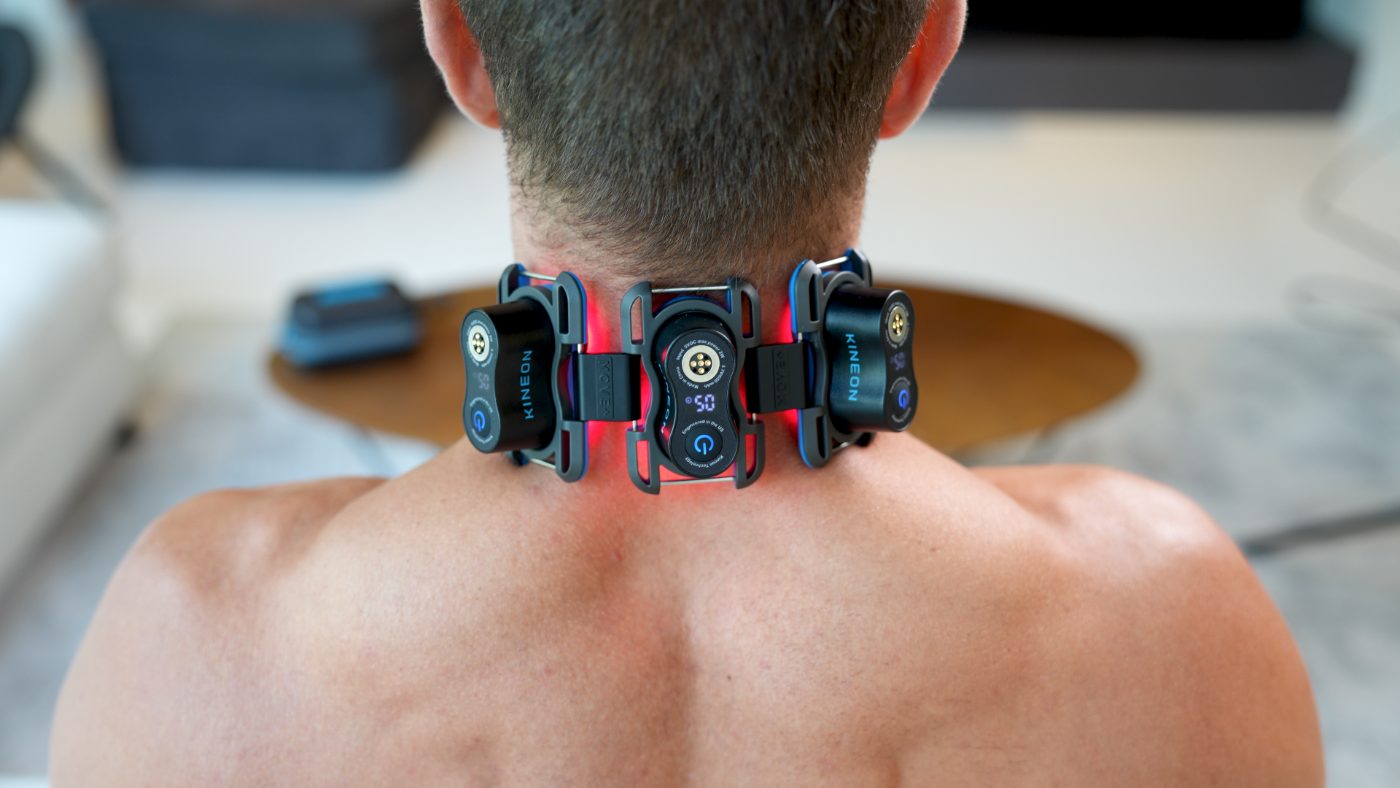
Red light therapy — also called low-level laser therapy (LLLT) or photobiomodulation — has been studied for neck pain in multiple large clinical trials. The strongest evidence comes from a meta-analysis of 820 patients published in The Lancet, which found LLLT reduces pain immediately after treatment and continues working for up to 22 weeks after a course ends. Here's what the research shows and how to apply it at home.
Key takeaways
- Yes — the clinical evidence for neck pain is among the strongest for any musculoskeletal condition.
- The landmark evidence comes from a 2009 meta-analysis in The Lancet ( PMID 19913903 ) — the world's most cited medical journal — which pooled data from 820 patients across multiple RCTs.
- Age-related degeneration of cervical discs and facet joints is a primary driver of chronic neck pain in adults over 40.
- Based on the clinical evidence, the following protocol aligns with effective parameters used in the PMID 19913903 meta-analysis:
Does Red Light Therapy Help Neck Pain?
Yes — the clinical evidence for neck pain is among the strongest for any musculoskeletal condition. Research shows photobiomodulation reduces pain intensity and improves function in chronic neck pain, with effects that persist long after treatment ends. A 2024 systematic review confirmed laser therapy has the largest effect sizes for neck pain and low back pain among all musculoskeletal conditions studied (PMID 39652213).
The mechanism: near-infrared wavelengths (850nm) penetrate to cervical muscles and joints, where they stimulate mitochondrial ATP production, reduce pro-inflammatory cytokines, and accelerate tissue repair at the cellular level.
What the Research Shows
Chronic Neck Pain and Cervicogenic Conditions
The landmark evidence comes from a 2009 meta-analysis in The Lancet (PMID 19913903) — the world's most cited medical journal — which pooled data from 820 patients across multiple RCTs. Key finding: "LLLT reduces pain immediately after treatment in acute neck pain and up to 22 weeks after completion of treatment in chronic neck pain." That 22-week carry-over effect is clinically significant — it means treatment effects accumulate and persist.
A 2022 meta-analysis (N=556) reinforced this finding: LLLT produced a statistically significant mean pain reduction of -1.29 on standard pain scales, with secondary improvements in pressure pain threshold and cervical range of motion (PMID 35962884).
Muscle Tension and Trigger Points
Research shows photobiomodulation reduces muscle tension and improves range of motion in necks with active trigger points and myofascial pain. The photochemical cascade — particularly the suppression of substance P and COX-2-mediated inflammation — directly addresses the muscle hypertonicity and referred pain patterns that characterise tension-type neck pain and cervicogenic headaches.
An earlier systematic review (N=273) established the evidence base for LLLT in acute and chronic neck pain across multiple clinical settings and device types (PMID 15954117).
FDA 510(k) Cleared · 660nm + 808nm
Try MOVE+ 2.0 Risk-Free for 30 Days
Shop MOVE+ 2.0 — $49930-day money-back guarantee
Types of Neck Pain Red Light Therapy Addresses
Cervical Spondylosis
Age-related degeneration of cervical discs and facet joints is a primary driver of chronic neck pain in adults over 40. Research shows LLLT reduces inflammatory mediators around degenerating cervical structures, with the 850nm wavelength penetrating deep enough to reach the posterior cervical structures where spondylosis pain originates.
Muscle Spasm and Tension
Desk workers and people with forward-head posture frequently develop chronic muscle spasm in the upper trapezius, levator scapulae, and suboccipital muscles. Red light therapy reduces muscle hypertonicity directly through its effects on the calcium-calmodulin pathway and ATP-mediated muscle relaxation — not just by reducing inflammation around the joint.
Post-Injury Neck Pain
Whiplash and sports-related neck strains benefit from both the anti-inflammatory and tissue-repair effects of PBM. The acute anti-inflammatory response (reduced prostaglandin E2, IL-1β, TNF-α) is particularly relevant in the first 72 hours post-injury, when light therapy can significantly reduce the inflammatory cascade before it becomes chronic.
How to Use Red Light Therapy for Neck Pain
Treatment Protocol
Based on the clinical evidence, the following protocol aligns with effective parameters used in the PMID 19913903 meta-analysis:
- Wavelengths: 660nm (red) + 808nm (near-infrared) — the MOVE+ 2.0 delivers both simultaneously
- Session duration: 10–20 minutes per session
- Frequency: Daily or every other day for the first 4 weeks, then 3–4× per week for maintenance
- Course length: Minimum 4 weeks for chronic conditions; most studies show 6–12 weeks for maximum effect
- Timing: Morning or post-exercise; avoid immediately before high-intensity activity
MOVE+ 2.0 Placement for Neck
Position the MOVE+ 2.0 diodes against the posterior cervical muscles — the back of the neck, centred on C4–C6. For cervicogenic headaches, place higher toward the suboccipital region (base of skull). For trapezius tension, drape the device across the upper trapezius bilaterally. The flexible band design allows direct contact with the cervical paraspinal muscles for maximum photon delivery.
The MOVE+ 2.0 for Neck Pain
The MOVE+ 2.0 is a wearable red light therapy device cleared by the FDA (510(k)) that delivers 660nm and 808nm wavelengths at precisely calibrated irradiance levels — the same parameters validated in the clinical literature above. Unlike panel devices that require you to sit stationary, the MOVE+ wraps directly around the treatment area so you can maintain position for the full session duration.
Internal links: red light therapy for back pain · how red light therapy works
FDA 510(k) Cleared · 660nm + 808nm
Try MOVE+ 2.0 Risk-Free for 30 Days
Shop MOVE+ 2.0 — $49930-day money-back guarantee