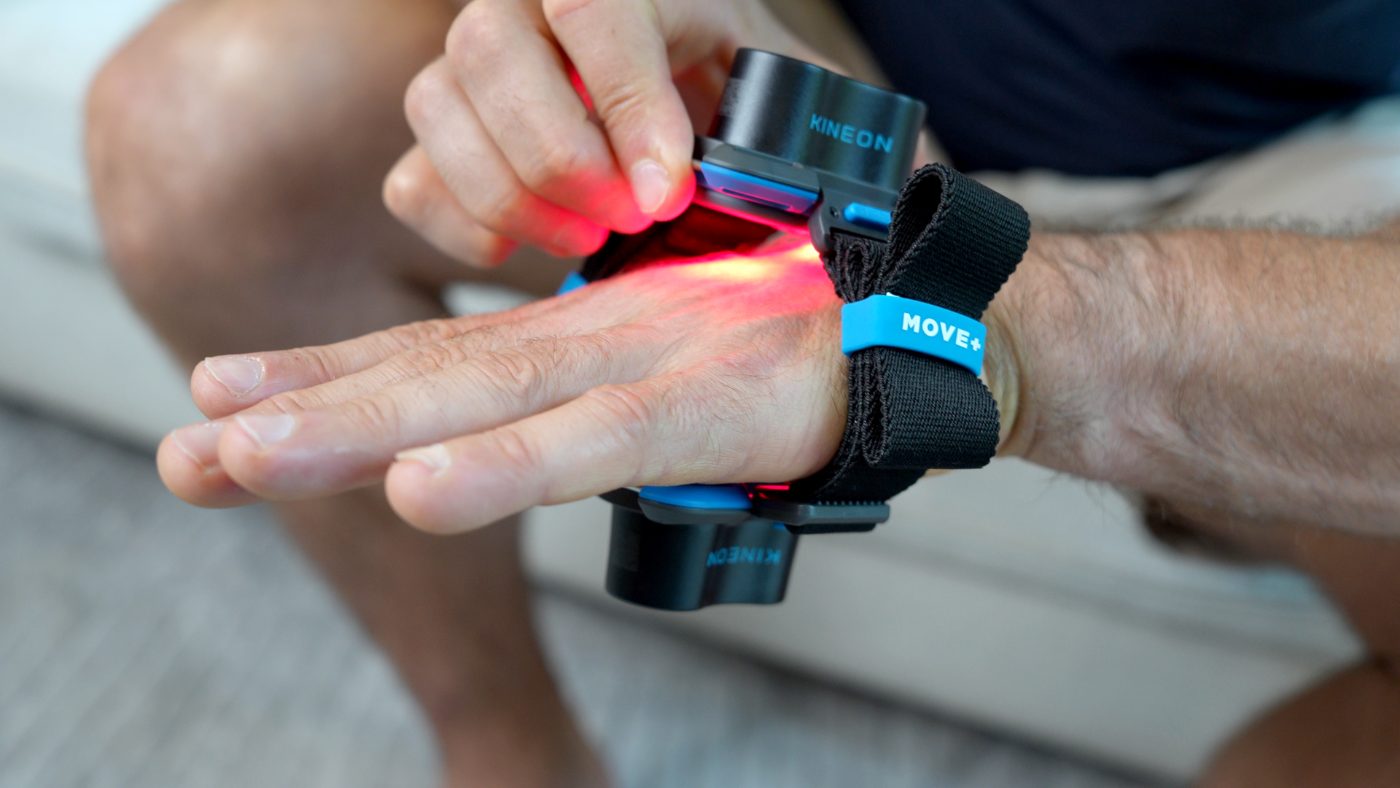
Wrist pain is one of the most common complaints we see—from carpal tunnel syndrome to overuse tendonitis to general inflammation. The good news: research shows that red light therapy can improve grip strength, reduce pain, and support nerve recovery in wrist conditions, particularly carpal tunnel syndrome. In this article, we review the clinical evidence, explain how the mechanism works for wrist tissue, and provide a practical protocol using the MOVE+.
Key takeaways
- Wrist pain typically involves inflammation, nerve compression, tissue damage, or a combination of these.
- The strongest evidence for red light therapy in wrist conditions comes from carpal tunnel syndrome research.
- Red light therapy is relevant for several wrist conditions:
- The MOVE+ is ideal for wrist pain because of its targeted design and wearable form factor.
How Red Light Therapy Works on Wrist Tissue
Wrist pain typically involves inflammation, nerve compression, tissue damage, or a combination of these. Red light therapy addresses all three mechanisms:
The wrist involves tendons, ligaments, and nerve tissue that become inflamed easily with repetitive use. Red light therapy reduces inflammatory cytokines like IL-6 and TNF-α, helping to calm the inflammatory cascade that drives pain.
Nerve Support and Recovery: In carpal tunnel syndrome, the median nerve is compressed and irritated. Photobiomodulation enhances nerve cell function and supports recovery. A meta-analysis of 531 participants found that red light therapy improves hand grip, pain scores, and nerve conduction in carpal tunnel syndrome.
Tissue Healing: Photobiomodulation demonstrates utility for tendinopathy across multiple anatomical sites including the wrist. By enhancing cellular energy and reducing inflammation, red light therapy supports the healing of damaged tendons and surrounding tissue.
Where wrist symptoms are driven by nerve involvement rather than tendon or joint irritation, Red Light Therapy for Neuropathy covers the nerve-specific evidence in more detail.
The Clinical Evidence for Carpal Tunnel and Wrist Pain
The strongest evidence for red light therapy in wrist conditions comes from carpal tunnel syndrome research. A high-quality meta-analysis examined 531 participants across multiple randomized controlled trials. Results showed:
For the full picture on that condition specifically, see Red Light Therapy for Carpal Tunnel Syndrome, which covers the same meta-analysis in more depth alongside dosing and recovery expectations.
- Significant improvement in hand grip strength
- Reduction in pain (VAS score) compared to sham treatment
- Improvement in nerve conduction velocity—indicating actual nerve recovery
- Benefits sustained up to 3 months post-treatment
- Most effective for mild-to-moderate carpal tunnel syndrome
Beyond carpal tunnel, low-level laser therapy reduces pain in musculoskeletal conditions with strong effect size at therapeutic doses. This extends the evidence base to other wrist conditions including tendonitis, ligament sprains, and general inflammation.
Wrist Conditions Red Light Therapy Can Help
Red light therapy is relevant for several wrist conditions:
- Carpal Tunnel Syndrome (CTS): The strongest evidence base. Red light therapy works best for mild-to-moderate CTS. Severe cases with complete nerve damage should be evaluated for surgery first.
- Wrist Tendonitis: Inflammation of the tendons that control wrist movement (flexor carpi radialis, extensor carpi radialis, etc.). Red light therapy reduces inflammation and supports healing.
- De Quervain's Tenosynovitis: Inflammation of tendons on the thumb side of the wrist. Red light therapy has shown promise in pilot studies.
- General Wrist Pain and Inflammation: From overuse, arthritis, or repetitive strain. Red light therapy reduces inflammation and pain.
- Post-Wrist Surgery Recovery: Red light therapy may accelerate recovery after wrist surgery when cleared by your surgeon.
Using the MOVE+ for Wrist Pain
The MOVE+ is ideal for wrist pain because of its targeted design and wearable form factor. Here's how to use it effectively:
- Positioning: Place the device over the area of pain. For carpal tunnel, focus on the inner wrist where the median nerve runs (palm-side of wrist, between the two forearm bones).
- Duration: Use 15-20 minute sessions. Some studies show benefit with sessions as short as 10 minutes; others use up to 30 minutes. Start conservatively and adjust based on comfort.
- Frequency: 3-5 days per week for carpal tunnel; daily for acute tendonitis. Consistency is more important than duration.
- Timeline: Expect initial improvement within 2-4 weeks. Meaningful relief typically emerges after 6-8 weeks. Full assessment of benefit should occur after 12 weeks.
- Ergonomics: Combine red light therapy with ergonomic adjustments. Proper keyboard height, mouse position, and wrist support are critical.
- Rest and Movement: Balance red light therapy with rest (especially at night with a wrist splint for CTS) and gentle movement/physical therapy.
For best results, treat red light therapy as one component of a comprehensive wrist care plan, not as a standalone solution.
Clinically Supported Wrist Pain Relief — Wearable and Drug-Free
The evidence for red light therapy in carpal tunnel syndrome is strong, and benefits extend to other wrist conditions. With MOVE+, you get a wearable, evidence-based device designed for exactly this—targeted wrist pain relief you can integrate into your daily routine.
Explore MOVE+Frequently Asked Questions
Safety Considerations for Wrist Pain
- Severe carpal tunnel: If you have complete nerve damage or severe symptoms, surgical evaluation is recommended before red light therapy.
- Active wrist fracture: Do not apply red light therapy over an acute fracture. Wait for initial healing (2-4 weeks) before beginning treatment.
- Wrist infection or open wound: Avoid treatment site if there is active infection or open wounds.
- Post-surgical wrist: If you've had wrist surgery in the last 6 weeks, consult your surgeon before beginning red light therapy.
- Ergonomic assessment: Red light therapy is most effective when combined with ergonomic improvements. Assess your workspace and make adjustments.
- Not a replacement: Red light therapy complements but does not replace physical therapy, ergonomic modification, or medical evaluation when needed.