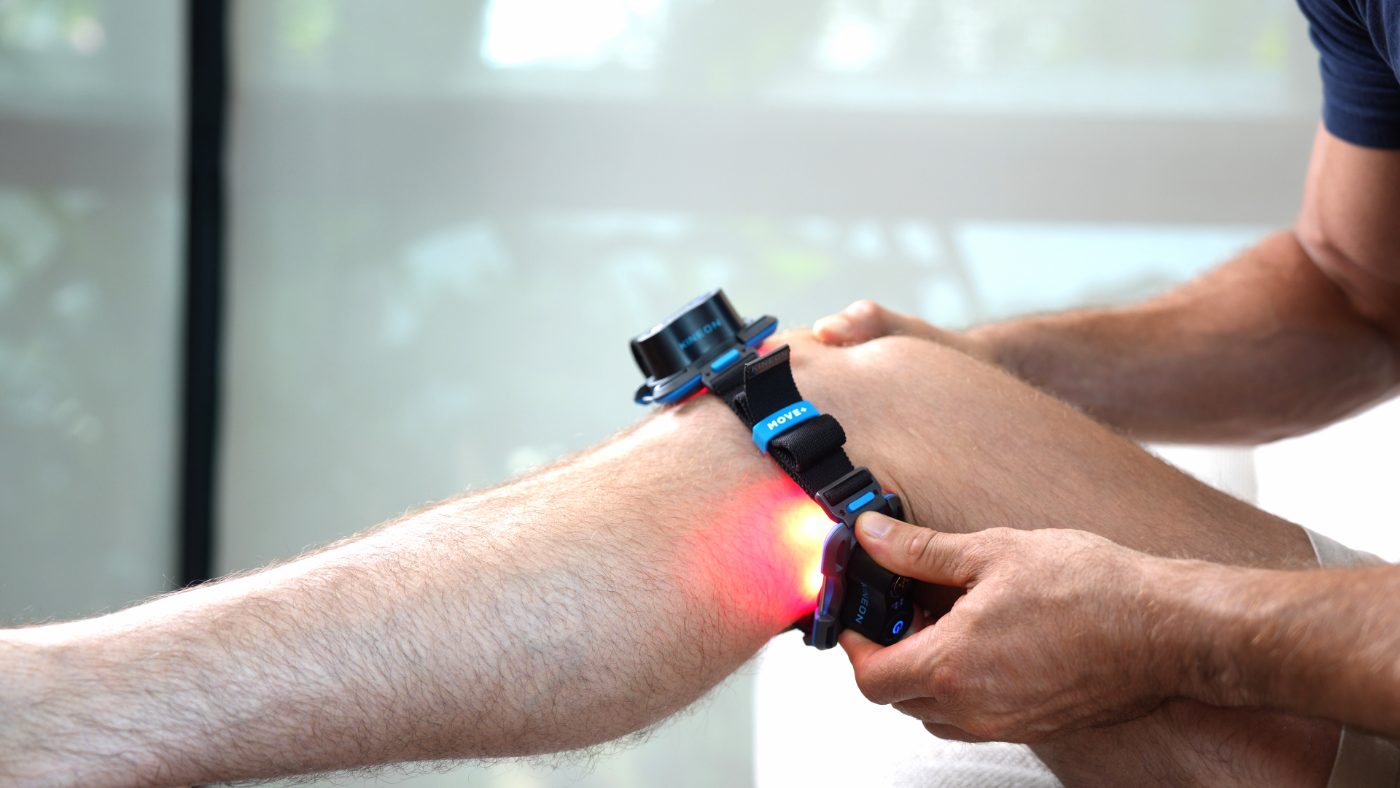
Osteoarthritis affects over 32 million Americans, and as the population ages, prevalence will only increase. The wear-and-tear degeneration of joint cartilage causes pain, stiffness, and lost function—particularly in the knees, hips, and hands. Traditional treatments include NSAIDs, injections, and eventually joint replacement. But a growing body of research suggests that red light therapy offers a drug-free, non-invasive option that addresses the underlying cellular mechanisms of osteoarthritis. Multiple systematic reviews demonstrate that photobiomodulation reduces pain and improves joint function. This comprehensive guide reviews the evidence and shows you how to use the MOVE+ for osteoarthritis.
Key takeaways
- Osteoarthritis begins with cartilage degradation.
- The strongest evidence for photobiomodulation in osteoarthritis comes from systematic reviews and meta-analyses, which synthesize results across multiple randomized controlled trials.
- Knee Osteoarthritis: Knee OA has the most robust evidence base.
- Device positioning: Position the MOVE+ directly over the affected joint.
How Red Light Therapy Works on Arthritic Tissue
Osteoarthritis begins with cartilage degradation. Cartilage is avascular (has no blood vessels), so it depends entirely on diffusion and mechanical pumping for nutrient delivery. As cartilage breaks down, chondrocytes (cartilage cells) become inflamed and die. The joint space narrows, inflammation increases, and pain worsens.
The underlying cellular process is the same across every condition on this site — see How Photobiomodulation Works at the Cellular Level for the full mechanism, including what the evidence does and does not establish.
Red light therapy works by restoring cellular energy to damaged joint tissue. When 808nm near-infrared light penetrates the joint, it stimulates mitochondrial ATP production in both cartilage cells and surrounding synovial cells. Increased ATP drives several healing mechanisms:
- Chris Bohler Chondrocytes produce more extracellular matrix and collagen, strengthening cartilage structure.
- Reduced inflammation: Photobiomodulation lowers pro-inflammatory cytokines (TNF-α, IL-6, IL-1β) that drive pain and degeneration.
- Improved joint lubrication: Synovial cells produce more hyaluronic acid, improving lubricating properties of synovial fluid.
- Angiogenesis and increased blood flow: Improved circulation delivers oxygen and nutrients to joint tissue.
- Decreased nerve sensitization: Lower pain signaling reduces both acute pain and chronic neuropathic pain.
- Potential cartilage preservation: By reducing inflammation and supporting cell function, RLT may slow cartilage degeneration.
The net result is pain reduction, improved joint mobility, and potentially slowed disease progression—achieved through cellular repair, not symptom masking.
The Clinical Evidence: Systematic Reviews
The strongest evidence for photobiomodulation in osteoarthritis comes from systematic reviews and meta-analyses, which synthesize results across multiple randomized controlled trials.
A landmark 2019 systematic review and meta-analysis in BMJ Open (Stausholm et al.) examined low-level laser therapy for knee osteoarthritis across multiple studies. Researchers concluded that LLLT reduces pain and disability in knee OA at optimal doses (4–8J with 785–860nm wavelength). This meta-analysis, which included dozens of trials, is the gold standard for evidence in the field.
A 2005 Cochrane systematic review examined low-level laser therapy for osteoarthritis and rheumatoid arthritis. The reviewers found that LLLT shows moderate evidence for pain relief and functional improvement in osteoarthritis. This Cochrane review, while from 2005, remains highly cited and demonstrates consistent benefits across studies.
A 2022 systematic review in Lasers in Medical Science specifically examined photobiomodulation for knee osteoarthritis. Researchers found that PBM significantly reduces pain scores in knee OA across multiple randomized controlled trials. This recent review confirms that evidence continues to accumulate in favor of photobiomodulation.
A 2024 systematic review and meta-analysis in Physical Therapy (Oliveira et al., N=542) examined photobiomodulation for knee osteoarthritis and found that 808nm near-infrared therapy produces consistent pain reduction in osteoarthritis patients, with benefits sustained at 6-month follow-up. This recent evidence confirms lasting benefit, not just temporary symptom relief.
Across systematic reviews, the evidence clearly supports photobiomodulation as an effective treatment for knee osteoarthritis. The mechanism is understood, the dose is well-established (4–8J at 785–860nm), and the safety profile is excellent.
Knee OA, Hip OA, and Hand OA: What the Research Shows
Knee Osteoarthritis: Knee OA has the most robust evidence base. Multiple systematic reviews and meta-analyses consistently demonstrate pain reduction and improved function with photobiomodulation. Studies show that 4–8J at 808nm, applied 2–3 times per week, significantly improves pain scores, walking ability, and quality of life. Knee OA is the most common OA type, affecting millions, and RLT offers a proven non-invasive option.
Hip Osteoarthritis: While hip-specific RCTs are fewer than knee OA studies, the pathophysiology is identical—cartilage degeneration, inflammation, pain. Clinical experience and the principles of photobiomodulation suggest that hip OA responds similarly to knee OA. The hip joint is deeper than the knee, which may require longer treatment or closer positioning, but the mechanisms of healing are the same. Evidence suggests that RLT can reduce hip pain and improve mobility.
Hand Osteoarthritis: Hand OA is common, especially in women, and causes significant functional impairment. Hand joints are superficial, making them ideal for photobiomodulation. While large RCTs for hand OA are limited, the mechanisms of cellular healing apply directly, and clinical reports suggest significant benefit. The smaller size of hand joints may require modified treatment protocols (shorter distances, focused beam).
The common theme across all OA types: photobiomodulation reduces inflammation, improves cartilage cell function, and reduces pain. While knee OA has the most evidence, the principles extend to all joints affected by osteoarthritis.
Using the MOVE+ for Osteoarthritis
Device positioning: Position the MOVE+ directly over the affected joint. For knee OA, place it on the front of the knee (quadriceps area) or on the sides of the knee. For hip OA, position over the lateral hip or anterior hip. For hand OA, apply directly to the affected finger or hand area. Keep the device 2–4 inches from skin. The device works through light clothing, but direct skin contact is optimal.
Treatment duration: Use the device for 10–15 minutes per joint. Some people find 12–15 minutes optimal; others get good results with 10 minutes. Do not exceed 15 minutes without professional guidance.
Frequency: For pain relief and functional improvement, treat 3–5 times per week. Starting with 3x weekly is conservative; many users move to 4–5x weekly after the first week and see faster results. After 4–6 weeks, if substantial improvement has occurred, you may reduce to 2–3x weekly for maintenance.
Timeline to improvement: Most people notice pain reduction within 2–4 weeks of consistent treatment. Mild to moderate OA may show improvement within 1–2 weeks. Severe or chronic OA may take 6–8 weeks for substantial relief. Consistency is critical—sporadic use delays results significantly.
Combined approach: Red light therapy works best alongside physical therapy, anti-inflammatory practices, and appropriate activity modification. Gentle range-of-motion exercises and strengthening of muscles surrounding the joint amplify the benefits of photobiomodulation. Weight management (if applicable) and anti-inflammatory diet also support joint health.
Long-term use: Red light therapy is safe for long-term use. Many people use the MOVE+ maintenance protocols (1–2x weekly) after initial improvement to prevent flare-ups and maintain function. Unlike NSAIDs, which can have cumulative risks, photobiomodulation has no known long-term adverse effects.
Frequently Asked Questions
⚠️ Osteoarthritis Safety Considerations
- Recent joint replacement (< 6 weeks post-surgery): Consult your surgeon before using red light therapy near implants.
- Active joint infection or inflammation: Wait for infection to clear before starting photobiomodulation.
- Photosensitising medications: Check with your doctor if you take medications that increase photosensitivity.
- Not a replacement for prescribed medications: Continue any medications prescribed by your physician unless explicitly told otherwise.
- Severe pain requiring urgent diagnosis: Ensure you have medical evaluation before assuming pain is from osteoarthritis.
Clinically Supported Relief for Arthritic Joints — at Home
The MOVE+ delivers the exact wavelength and dose shown effective in systematic reviews. Reduce pain, improve mobility, and support joint health without drugs or side effects. Thousands of arthritis sufferers have reclaimed their lives with red light therapy.
Start Your Recovery