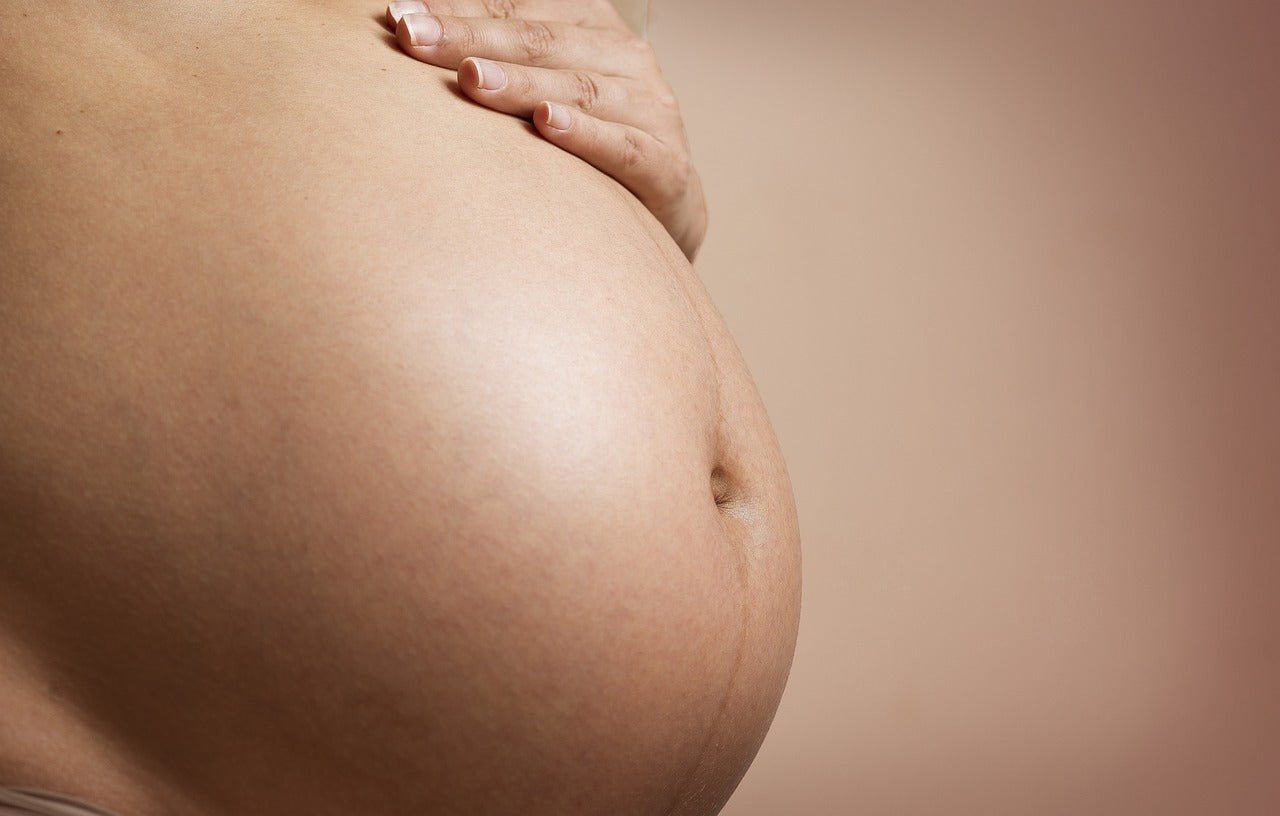
By the third trimester, around two-thirds of pregnant women experience lower back pain, and roughly one in five develops pelvic girdle pain. Hip and round-ligament pain are close behind. Most over-the-counter painkillers — NSAIDs in particular — are restricted or off-limits in pregnancy, leaving expectant mothers with very few options that don't involve medication.
Red light therapy is one of those few options. It's non-pharmaceutical, non-thermal, and non-ionising, with a strong safety profile in non-pregnant populations. But "few options" isn't the same as "no caution required" — and pregnancy specifically remains a relative contraindication in the published photobiomodulation literature. This guide leads with the pain you're actually trying to manage, then walks through what the evidence does and doesn't say, and gives you the exact guardrails your OB-GYN will want to see before signing off.
Key takeaways
- Most pregnancy pain falls into three buckets, all of which are mechanical — driven by the postural, ligamentous, and muscular changes that come with carrying a growing baby.
- Clinical research specifically examining red light therapy during pregnancy is extremely limited.
- The first trimester is when major fetal organ systems develop.
- Before starting treatment:
The Three Pains Pregnancy Most Often Brings
Most pregnancy pain falls into three buckets, all of which are mechanical — driven by the postural, ligamentous, and muscular changes that come with carrying a growing baby. Knowing which one is the dominant pain pattern matters, because the safest applications of red light therapy in pregnancy are tightly localised to specific anatomical sites.
1. Lower back pain
The single most common pregnancy pain. As the uterus expands, the centre of gravity shifts forward, the lumbar curve deepens (lordosis), and the paraspinal muscles work harder to keep the spine upright. The result is a steady, dull ache across the lower back that tends to worsen through the day and through the trimesters. RLT is most often considered for this presentation because the lower back is well away from the abdomen and uterus.
2. Pelvic girdle pain (PGP)
Pelvic girdle pain affects the joints at the front of the pelvis (pubic symphysis) and at the back (sacroiliac joints). The pregnancy hormone relaxin softens the ligaments holding these joints together — useful for delivery, less useful for walking up a flight of stairs. PGP often shows up as sharp pain on weight-bearing or position changes. Application sites for RLT, if approved, would be the lateral hip and posterior sacroiliac region — never directly over the pubic bone or abdomen.
3. Hip and round-ligament pain
The round ligaments support the uterus and stretch significantly during the second and third trimesters. Combined with hormonal joint laxity and altered gait mechanics, this often produces a sharp catching pain on the side of the hip or in the lower abdomen. RLT in this presentation should always avoid the abdominal application zone and focus on the lateral hip / glute area.
Why Red Light Therapy Is on the Shortlist for Pregnancy Pain
The shortlist of pain-management options that are even conditionally compatible with pregnancy is short: physiotherapy, prenatal massage, supportive belts, careful exercise, paracetamol (acetaminophen) at the lowest effective dose, and — increasingly — non-thermal photobiomodulation. NSAIDs are typically avoided after 20 weeks, opioids are avoided across the whole pregnancy where possible, and most muscle relaxants and topical pain agents are flagged.
Red light therapy enters the conversation for three reasons:
- Non-pharmaceutical. No active ingredient absorbed into the bloodstream, no metabolic load on the liver or placenta.
- Non-thermal at clinical doses. Doesn't elevate core or local tissue temperature meaningfully — heat exposure is one of the things the obstetric literature is consistently cautious about.
- Non-ionising. Unlike X-ray or other forms of ionising radiation, photobiomodulation wavelengths (660 nm + 808 nm) cannot damage DNA.
None of those properties make RLT automatically safe in pregnancy — they just put it in the same category as other low-risk modalities that practitioners may approve on a case-by-case basis. The next section explains what the actual research does and doesn't show.
What the Research Currently Shows
Clinical research specifically examining red light therapy during pregnancy is extremely limited. This doesn't mean the therapy is unsafe—it means human studies haven't been conducted at scale. What we do know comes from safety profiles in non-pregnant populations and a small number of case reports.
A 2017 review in the Journal of Obstetrics and Gynaecology examined low-level laser therapy during pregnancy and found that no adverse effects were reported in limited case studies, though more research is needed.
A comprehensive 2017 review published in Seminars in Cutaneous Medicine and Surgery examined the photobiomodulation safety profile and noted that LLLT has a favorable safety profile, though pregnancy is listed as a relative contraindication pending further research.
The key insight: Photobiomodulation is non-thermal and non-ionizing, which means it doesn't generate excessive heat or harmful radiation. However, the precautionary principle suggests waiting for more direct evidence before using it during pregnancy, especially in the first trimester.
Considerations by Trimester
The first trimester is when major fetal organ systems develop. This is the most critical period for avoiding any potential risks. Most practitioners recommend avoiding red light therapy during this time, even though no adverse effects have been reported. If you are experiencing severe pain and considering RLT, discuss it explicitly with your OB-GYN.
Second Trimester (Weeks 14–20): By the second trimester, major organ development is complete. Some women, with their doctor's approval, use red light therapy for back pain and joint discomfort during this period. If your healthcare provider gives the go-ahead, treatment can begin—but always avoid direct abdominal application and limit frequency to 2–3 sessions per week.
Third Trimester (Weeks 21–40): The third trimester poses different challenges, including increased back pain, pelvic pressure, and circulation issues. Red light therapy may help manage these symptoms, particularly for localized pain. Again, with physician approval and careful attention to avoiding the abdomen, RLT can be used. Many women find relief from lower back and hip pain during this final stretch.
The critical message: Never use red light therapy without explicit clearance from your OB-GYN, regardless of trimester.
Safe Use Guidelines for Pregnant Women
Before starting treatment:
- Schedule an appointment with your OB-GYN and discuss photobiomodulation therapy specifically.
- Bring information about the MOVE+, including wavelength (808nm), power output, and intended use.
- Disclose any pregnancy complications, previous miscarriages, or high-risk factors.
- Ask directly: "Is red light therapy safe for me and my pregnancy?"
If your doctor approves:
- Wait until at least week 13 (end of first trimester) before starting treatment.
- Begin with lower frequency—2 times per week—and observe for any changes in symptoms or discomfort.
- Never apply the device directly to the abdomen or over the uterus.
- Limit each treatment to 10–15 minutes.
- Focus on areas like the lower back, hips, shoulders, and neck for pain relief.
- Stop immediately if you experience unusual symptoms: spotting, cramping, dizziness, or nausea that is unrelated to normal pregnancy symptoms.
Documentation and communication:
- Keep records of your treatments (date, area treated, duration, any changes in symptoms).
- Report your use of RLT to all healthcare providers involved in your pregnancy care.
- Attend all scheduled prenatal appointments and report any concerns immediately.
When to Consult Your Healthcare Provider
Contact your OB-GYN before starting red light therapy if you have:
- History of miscarriage or pregnancy loss
- Placental abnormalities or preeclampsia risk
- Gestational diabetes or other pregnancy-related conditions
- Intrauterine growth restrictions (IUGR) or other fetal concerns
- Cerclage or other surgical interventions during pregnancy
- Preterm labor risk factors
- Any condition listed as high-risk by your care team
Stop red light therapy immediately and contact your healthcare provider if you experience:
- Vaginal spotting or bleeding
- Cramping or abdominal pain unrelated to Braxton-Hicks contractions
- Dizziness, fainting, or vision changes
- Shortness of breath or chest pain
- Fever or signs of infection
- Sudden reduction in fetal movement (third trimester)
Frequently Asked Questions
⚠️ Safety Considerations for Pregnancy
- First trimester: Avoid until more research is available.
- Avoid direct abdominal application: Never apply the device over the uterus or abdomen during any trimester.
- Consult OB-GYN before use: Get explicit approval from your obstetrician before starting any red light therapy.
- Do not use if pregnancy is high-risk: If you have preeclampsia risk, preterm labor concerns, or other complications, consult your doctor first.
- Always follow device manufacturer guidelines: Use the MOVE+ according to instructions, and never exceed recommended treatment duration.
Effective Pain Relief, Carefully Considered
During pregnancy, safety is paramount. The MOVE+ offers a non-pharmaceutical option for pain management—when approved by your healthcare provider. Thousands of women trust Kineon for clinical-grade light therapy tailored to their needs.
Explore MOVE+