The Real Reason Your Knee Pain Keeps Coming Back — And The NASA Technology That's Finally Changing That
Doctors have been treating knee pain the wrong way for decades. A 40-year-old space program discovery — now available in a device the size of your palm — is giving thousands of women their lives back.

Every morning starts the same way. Both hands on the knees, waiting to find out what kind of day it's going to be.
If you've been dealing with knee pain for any length of time, you've probably tried most of what medicine has to offer. The ibuprofen. The ice packs. The brace that's supposed to take the load off. The physio appointments. Maybe even the cortisone shot your doctor called "the next step."
And here's the thing that nobody tells you: most of those treatments are designed to manage your pain. Not fix it. Not heal it. Just quiet it down long enough for you to function — until it comes back again, often worse.
That cycle isn't a coincidence. It's a consequence of one fundamental problem that most knee treatments never address.
They don't go deep enough.
Why Everything You've Tried Has Only Worked Temporarily
Think about how most common knee treatments work. An anti-inflammatory like ibuprofen intercepts pain signals traveling to your brain. It's like pulling the battery out of a smoke alarm. The alarm stops. The fire keeps burning.
Imagine your knee is a burning building. Most treatments stand outside and spray water through the window. They cool things down temporarily. But the fire — the inflammation loop deep inside the joint tissue — is still burning. Which is exactly why the pain always comes back.
A brace physically offloads the joint. Ice temporarily shrinks blood vessels to reduce swelling. Steroid injections suppress inflammation chemically — for a few weeks, until the injection wears off and the inflammation rebuilds.
Not one of these treatments reaches the actual source of the problem: the damaged tissue inside your joint, where cartilage is worn, where meniscus fibers are frayed, where the inflammation cycle never fully shuts down.
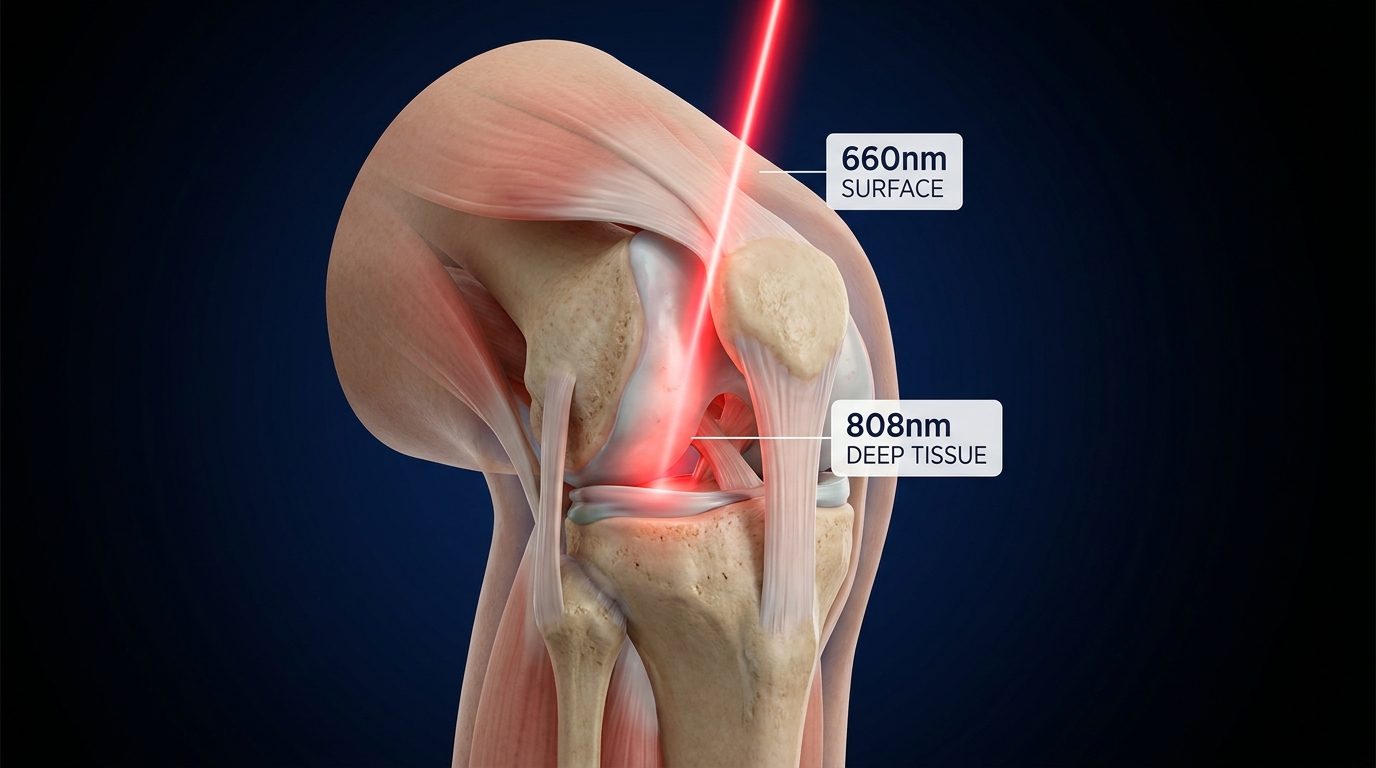
Standard treatments stop at the skin. The MOVE+ 808nm laser penetrates up to 2 inches — reaching the cartilage, meniscus, and inflamed tissue underneath.
That's not a failure of medicine. It's a limitation of physics. Until recently, there was simply no non-invasive way to deliver therapeutic energy deep enough into joint tissue to trigger real healing.
Until a NASA experiment in the 1980s accidentally changed everything.
How NASA Accidentally Solved Chronic Pain

In the 1980s, NASA scientists were trying to solve a completely different problem: how to grow food in space. They exposed plants to specific wavelengths of red light to accelerate growth during long missions — and it worked. Plants grew faster, healthier, with more energy.
But then something unexpected happened. Researchers noticed that the same red wavelengths that powered plant cell growth also appeared to accelerate healing in damaged human tissue.
The mechanism turned out to be universal across biology: certain wavelengths of red and near-infrared light are absorbed directly by the mitochondria in your cells — the same cellular machinery that generates energy for repair. When the right wavelengths reach your cells, they work like a jump-start for a flat battery.
Your cells get the energy they need to do what they're designed to do: reduce inflammation, rebuild damaged tissue, and break the cycle of chronic pain.
Over the four decades since that discovery, the science has been validated in more than 6,000 peer-reviewed studies. The mechanism is well understood. The clinical evidence is real. What took 40 years was building a device powerful enough to deliver therapeutic doses of that light deep enough into joint tissue — and small enough to use at home.
How Red Light Therapy Actually Works — In Plain English
Here's the part most companies explain badly. Let's fix that.
Your body heals itself constantly. Small injuries, micro-tears, inflammation — your cells manage all of it, automatically, if they have enough energy to do the job. The problem with chronic knee pain is that the cells in your joint tissue have become depleted. The inflammation is greater than your body's capacity to repair it. The healing process stalls. Pain becomes permanent.
Your cells run on a biological fuel called ATP. Think of ATP like the charge in your phone battery. When the battery runs low, your phone gets slow and stops working properly. Your cells are the same — depleted cells can't repair damaged tissue. Red light therapy is essentially a charger. The right wavelengths of light are absorbed directly by your cell's energy centers, restoring the cellular "charge" that powers natural healing from the inside out.
This is not temporary symptom management. It's supporting the actual biological repair process — which is why the results build over time, and why for most users the relief lasts rather than cycling back.
Light penetrates 2 inches into joint tissue
808nm near-infrared light passes through skin, fat, and muscle — reaching the cartilage, meniscus, and synovial tissue where chronic inflammation lives. Surface treatments can't reach this layer.
Mitochondria absorb the light energy
Cells absorb the photons and convert them into ATP — the cellular fuel that powers tissue repair. Depleted, inflamed cells get the energy they've been missing.
Inflammation markers drop, repair begins
Energized cells suppress the pro-inflammatory signals that keep the pain cycle going. Cartilage and connective tissue begin regenerating instead of continuing to degrade.
Results compound over weeks of consistent use
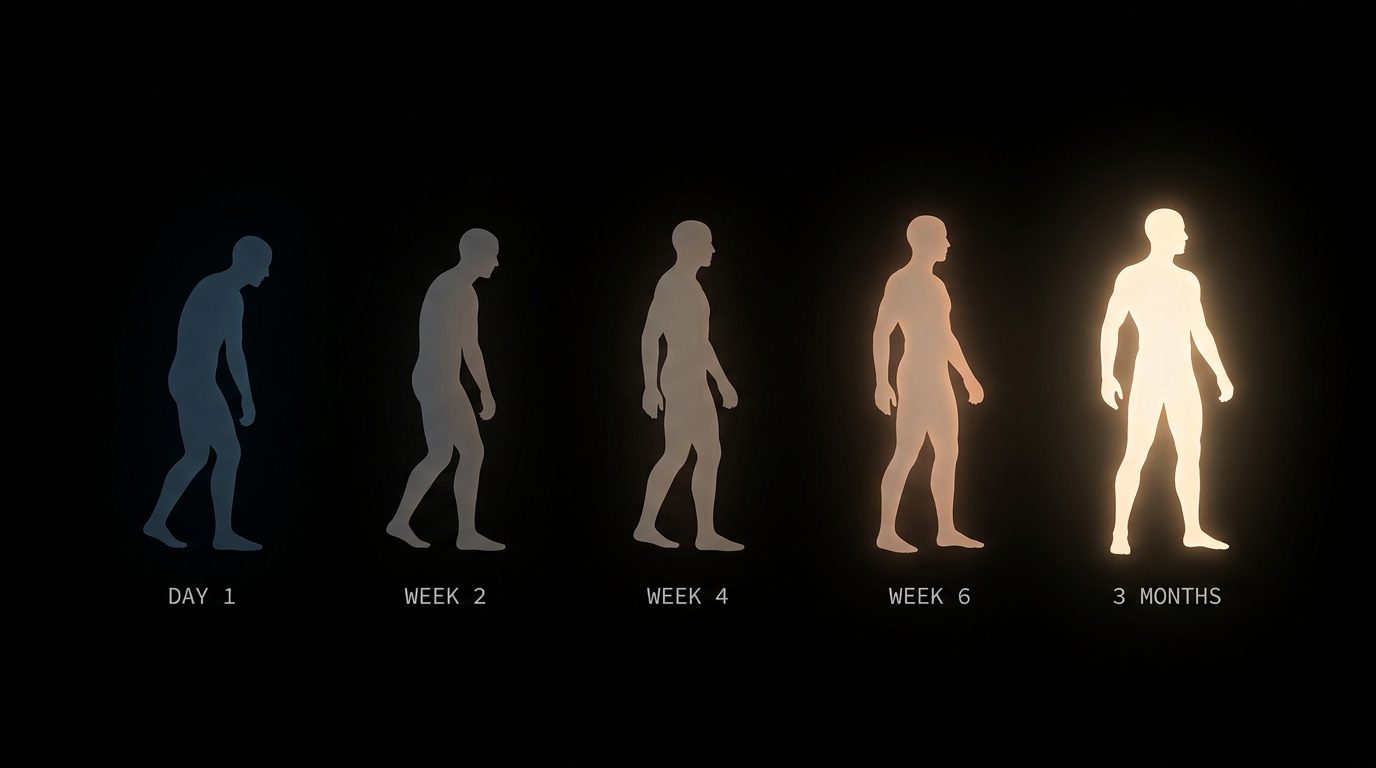
Unlike a pill that wears off, the effects of daily sessions build. Most users notice meaningful change within 2–3 weeks. By week 6–8, the difference is typically dramatic.

The Woman Who Spent Five Years Looking for This
Carol Brennan is 53. She spent most of her adult life hiking, tending her garden, and staying active — the kind of person who was always on her feet. Then her knees started going.
"It was gradual," she told us. "First it was just the stairs. Then getting up from the sofa. Then I realised I was avoiding things — I stopped volunteering for the long walks, I started saying no to things I used to love. My whole world quietly got smaller."
Over five years, Carol tried physiotherapy, two courses of anti-inflammatories, a cortisone injection, a specialist knee brace, and more supplements than she cares to remember. She did the exercises religiously. She watched her weight. She did everything right.
She found red light therapy the way a lot of determined women do — researching late at night after another appointment that ended with a shrug and a repeat prescription. Her daughter had mentioned something called photobiomodulation in passing. Carol, being Carol, looked it up properly.
"I spent about three evenings reading studies. I needed to understand the mechanism before I was going to spend money on something. When it finally clicked — that it wasn't masking anything, it was actually supporting repair at the cellular level — I thought, why has no one told me about this?"
What she had been missing turned out to be depth. Every treatment she'd tried worked at the surface. None of them reached the tissue where her inflammation actually lived.
After seven weeks of daily 10-minute sessions with the Kineon MOVE+, Carol walked a full day in the hills for the first time in three years. Not because she pushed through the pain. Because the pain wasn't there.
"I cried at the top of the first hill. Properly cried. My husband thought something was wrong. I just said — I'd forgotten what this felt like."
Kineon MOVE+
Medical-grade red light therapy engineered to go deep enough to actually work.
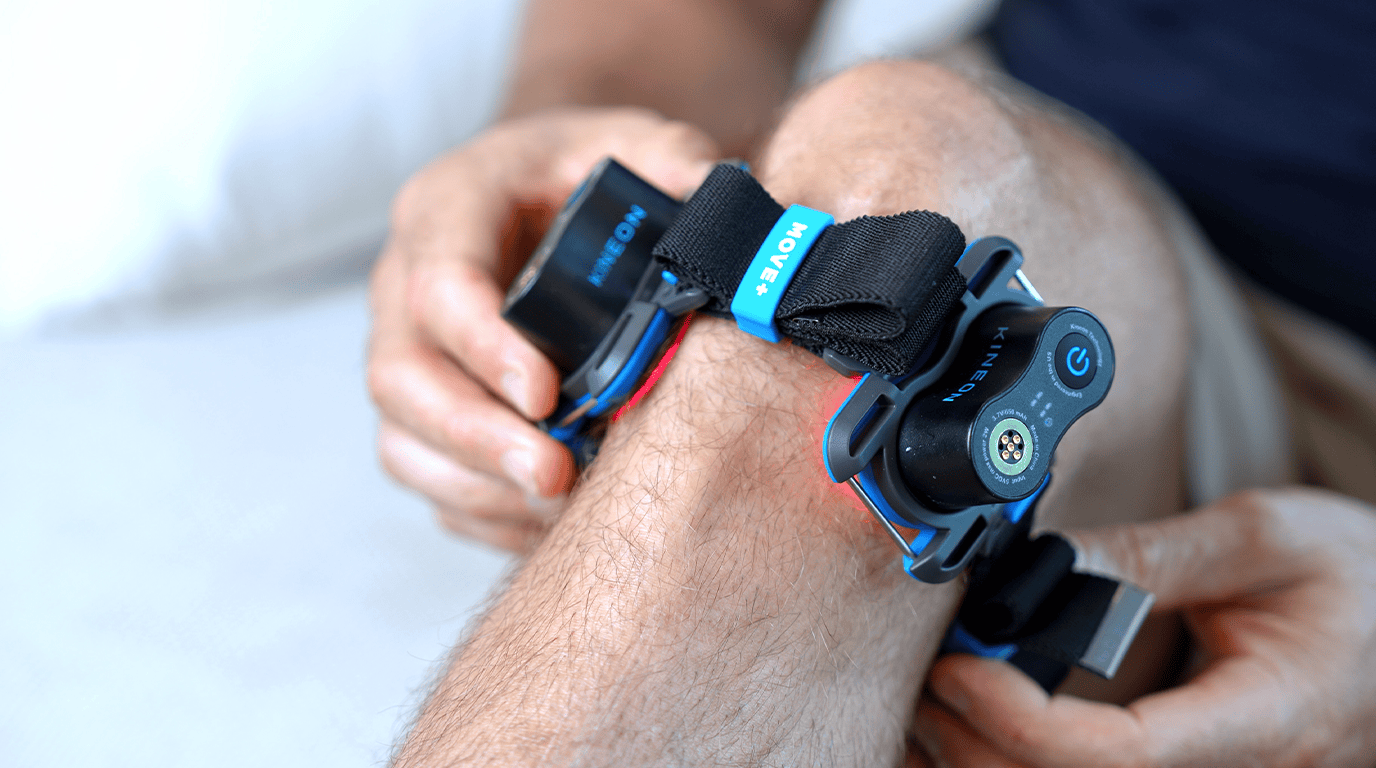
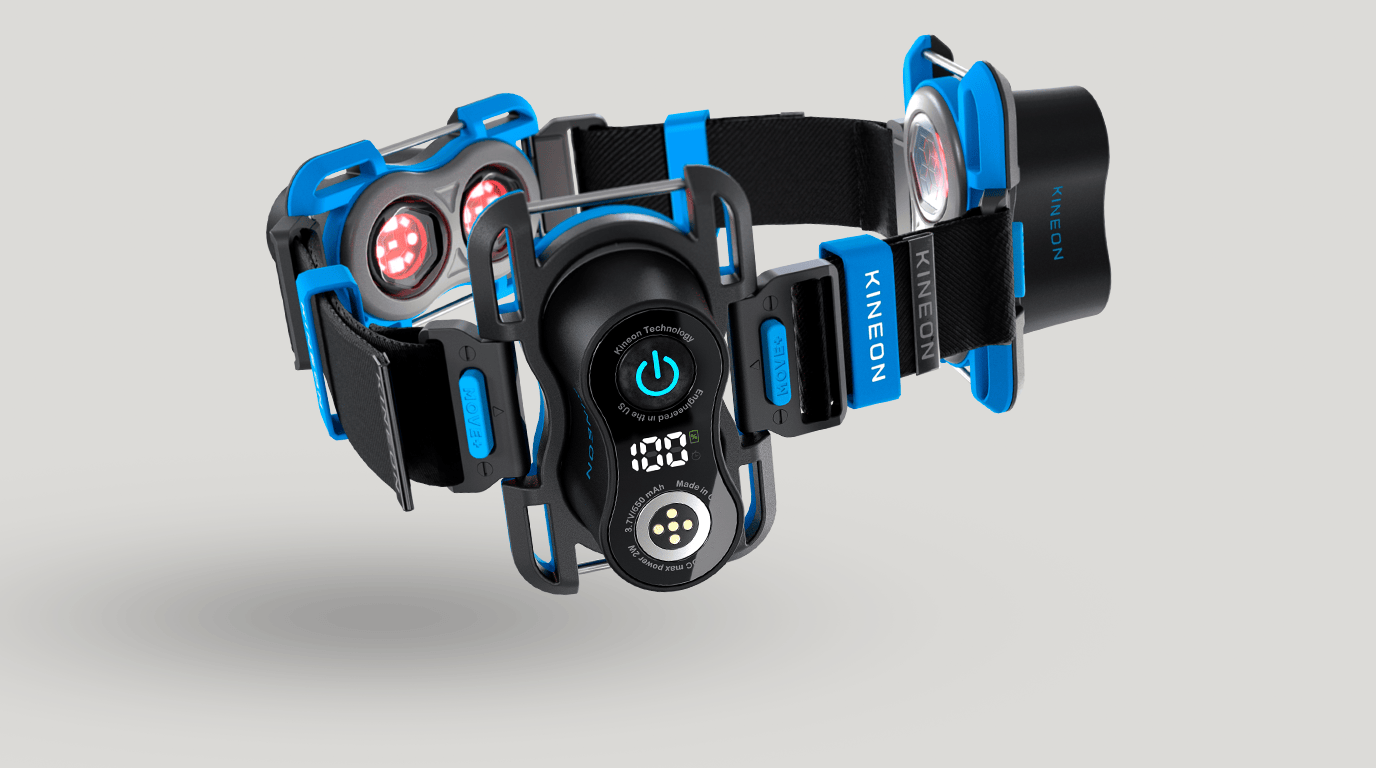
Most red light devices on the market use cheap LED panels that emit light at surface level — enough for skincare, not enough for joint repair. The MOVE+ is built differently. It combines medical-grade lasers with deep red LEDs, specifically calibrated to penetrate the tissue layers that matter.
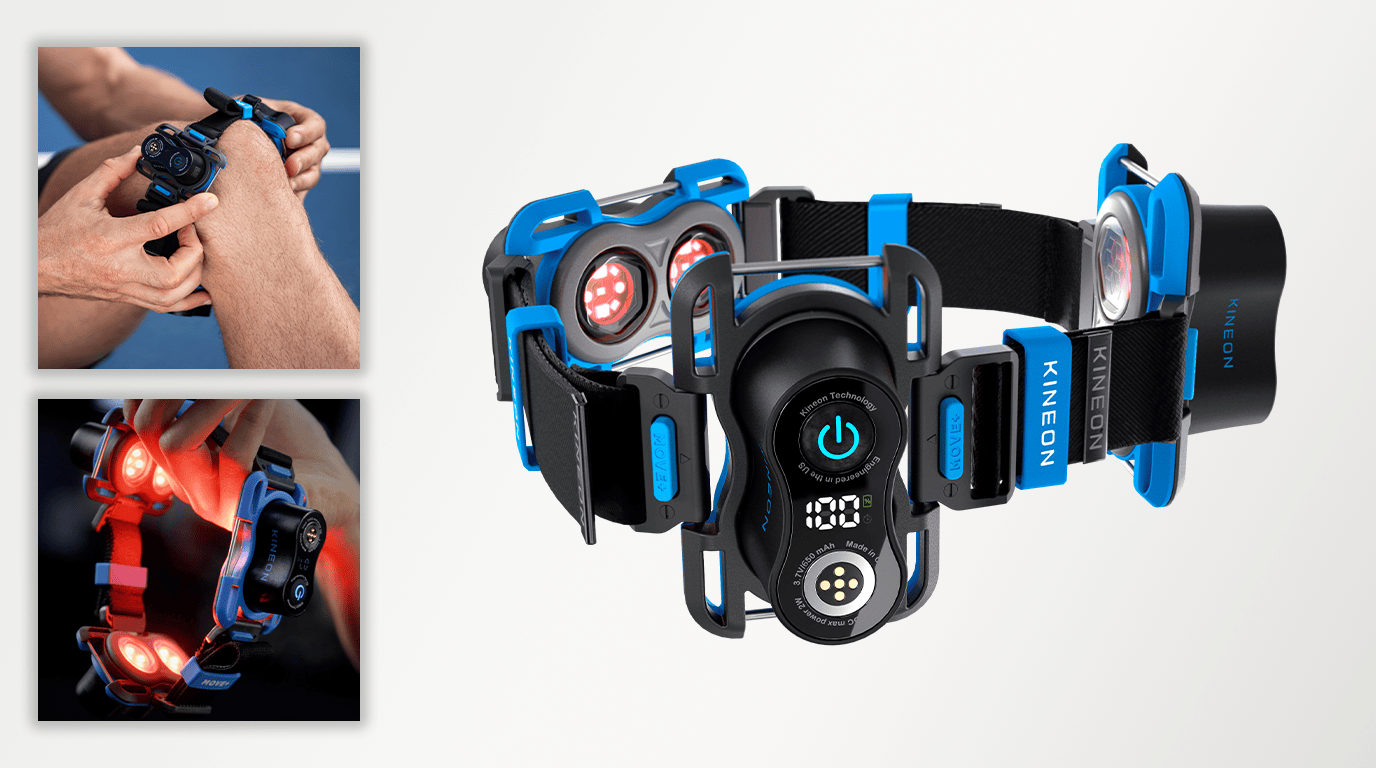
Strap it to your knee, press start, and get on with your day. It runs for 10 minutes and shuts off automatically. No gel. No wires during use. No setup beyond wrapping the strap. You can wear it watching TV, reading, or sitting at your desk.
Why This Is Different From the Red Light Panels You've Seen Online
A fair question. The market is flooded with cheap LED devices that claim to do the same thing. Here's the critical difference:
LED-only devices emit light at skin level. They're useful for surface tissue — skin healing, minor muscle soreness. But they physically cannot penetrate deep enough to reach inflamed joint tissue. The photons scatter before they get there.
The MOVE+ uses Class 1 medical-grade lasers at 808nm — the same laser wavelength used in clinical photobiomodulation therapy. Laser light is coherent and collimated, meaning it maintains intensity as it penetrates tissue. That's how it reaches the cartilage, meniscus, and synovial membrane — the structures where chronic knee inflammation actually lives.
| Treatment | Reaches deep tissue? | Kineon MOVE+ |
|---|---|---|
| Ibuprofen / NSAIDs | ✗ Masks pain signals only | ✓ Targets root inflammation |
| Ice / heat | ✗ Surface effect only | ✓ Penetrates 2 inches deep |
| Knee brace | ✗ Mechanical support, no healing | ✓ Stimulates tissue repair |
| Cortisone injection | ✗ Temporary, degrades tissue over time | ✓ Builds cumulative improvement |
| Cheap LED devices | ✗ Photons scatter at skin level | ✓ Medical-grade laser penetration |
What 35,000+ Users Report
"After 3 weeks I noticed I was getting up from my chair without thinking about it. By week six I was back in my garden properly for the first time in two years. I wish I'd found this sooner."
"I'd been told to stop long walks and just rest it. The MOVE+ gave me something that actually helped instead of just telling me to do less. I'm back to my 10k steps a day and the swelling is gone."
"Surgery was booked. I used the MOVE+ every morning for 10 weeks before my follow-up scan. My consultant said the improvement was significant enough that surgery was no longer necessary. I still can't quite believe it."
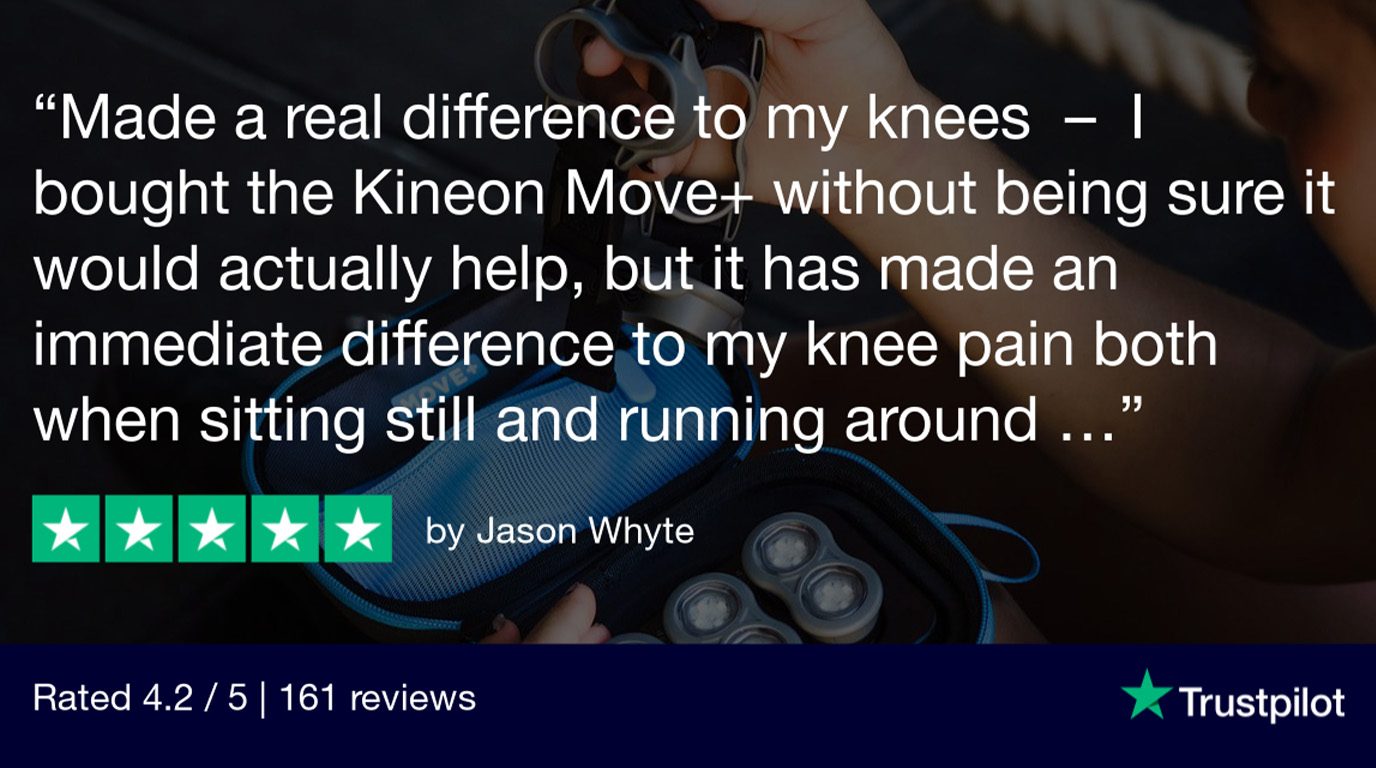
What the average MOVE+ user reports
- 01 After Week 1–2: Reduced morning stiffness. Easier movement on stairs. Better sleep.
- 02 After Week 3–4: Noticeable reduction in daily pain. Less reliance on painkillers.
- 03 After Week 6–8: Return to avoided activities — walking, hiking, gardening, time with family.
- 04 After 3 months: Sustained improvement. Pain-free days become the norm, not the exception.
Results aren't instant — this isn't a pill. You're triggering a biological process that takes time to accumulate. For everyone who stays consistent, the question isn't whether it works. It's whether you'll give it long enough to find out.
Real Questions from Real Knee-Pain Sufferers
Answers sourced from Kineon's clinical team and 6,000+ clinical papers on photobiomodulation.
Will the MOVE+ actually help my knee pain?
How long does each treatment take?
Is it safe? Are there side effects?
How is the MOVE+ different from cheaper red-light devices?
Does it work for arthritis and chronic pain?
What's the 30-day trial?
Can I use it on other areas, not just my knee?
How quickly will I feel results?
Try The Kineon MOVE+ Risk-Free
Medical-grade red and near-infrared laser therapy for knee pain
Medical Device
Wavelengths
No Side Effects
2–5 Days